
Tropical Travel Girl
From Oxford to London: A 12-Night Journey Through England’s History, Countryside, and Culture
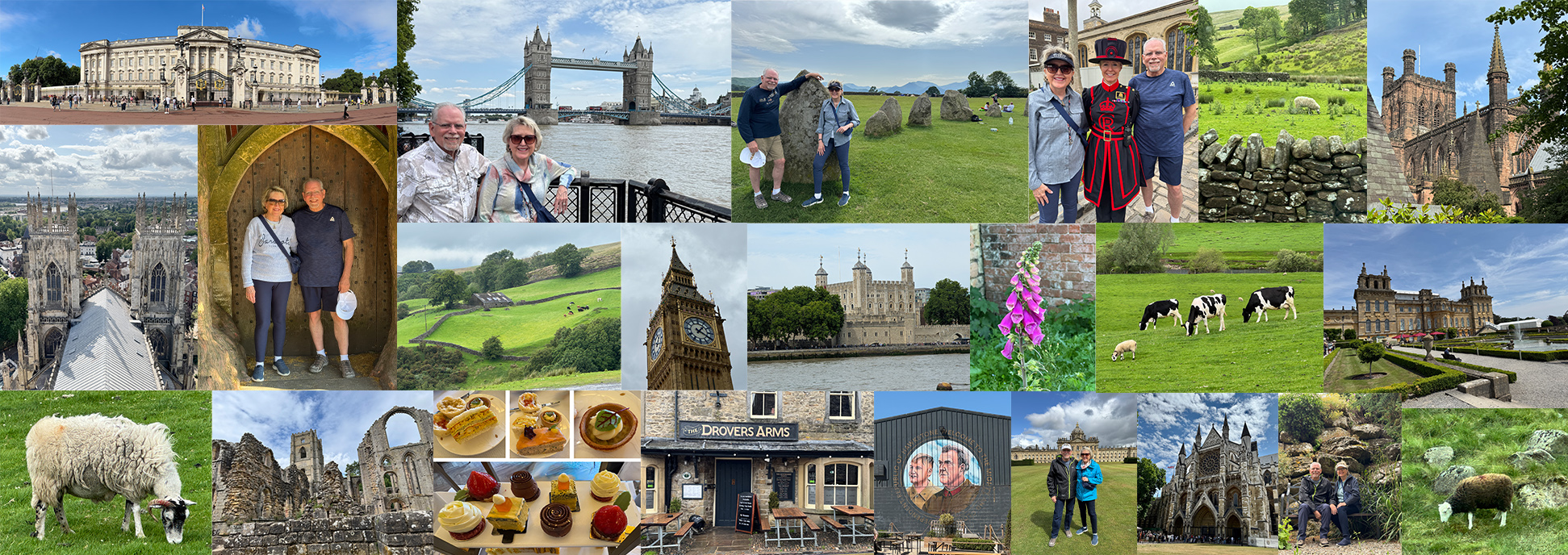
There’s something powerful about seeing a country anew, especially with a hint of ancestral familiarity coloring every landscape. More than twenty years after my last visit to England—and driven by my British roots and a growing love for British television—I returned, eager to walk historic streets and explore iconic countryside, this time with my husband. Instead of renting a car and touring on our own, we chose the comfort and intimacy of a small-group tour, traveling by mini-coach with every detail arranged so we could fully immerse ourselves in the moment.
Our Timeless English Adventure Begins
Adeo Travel’s eight-day tour, “England’s Rustic Charm,” was almost tailor-made for a pair of Anglophiles. There were only 10 of us—just enough for camaraderie but never crowded. We shared curiosity and conversation, as our expert driver-guides brought history and culture to life in ways no guidebook could. It was efficient, stress-free, and left room for much more than checking off must-see sites. Many of the stops included on our itinerary were lesser-known or added at the last minute, allowing us to explore parts of England we may have never discovered on our own. Having someone else handle the logistics was the perfect way to relax and enjoy the beauty of the countryside.
Part of the joy came from the overlap with the England we’ve come to love from afar: classic PBS dramas, the Yorkshire countryside featured in All Creatures Great & Small, and even a nod to Clarkson’s Farm‘s contemporary humor. Whenever we recognized a landscape from TV or felt history come alive in a cathedral or market, it reminded us how stories—on screen and off—shape our sense of place.
Oxford & the Cotswolds: Scholar’s Footsteps and Vintage Villages
Days 1 & 2:
We arrived in Oxford, in time to settle into our hotel, the Randolph Hotel by Hilton. We freshened up for a welcome dinner at our hotel where we met up with the others in our group. On our first full day, our guide led us on a walking tour through areas of this prestigious university town where centuries of thinkers, writers, and politicians have studied.
Three of the University of Oxford’s most famous writers include J.R.R. Tolkien, C.S. Lewis, and T.S. Eliot. Oxford-educated politicians run the gamut from British Prime Ministers Tony Blair and Margaret Thatcher to U.S. President Bill Clinton. (One of my favorite songwriter/singer/actors — Kris Kristofferson — was a Rhodes scholar, and Oxford University graduate, too.)


The dress typically includes a black suit, white shirt, and a tie or bow tie. ©Debbra Dunning Brouillette
Blenheim Palace
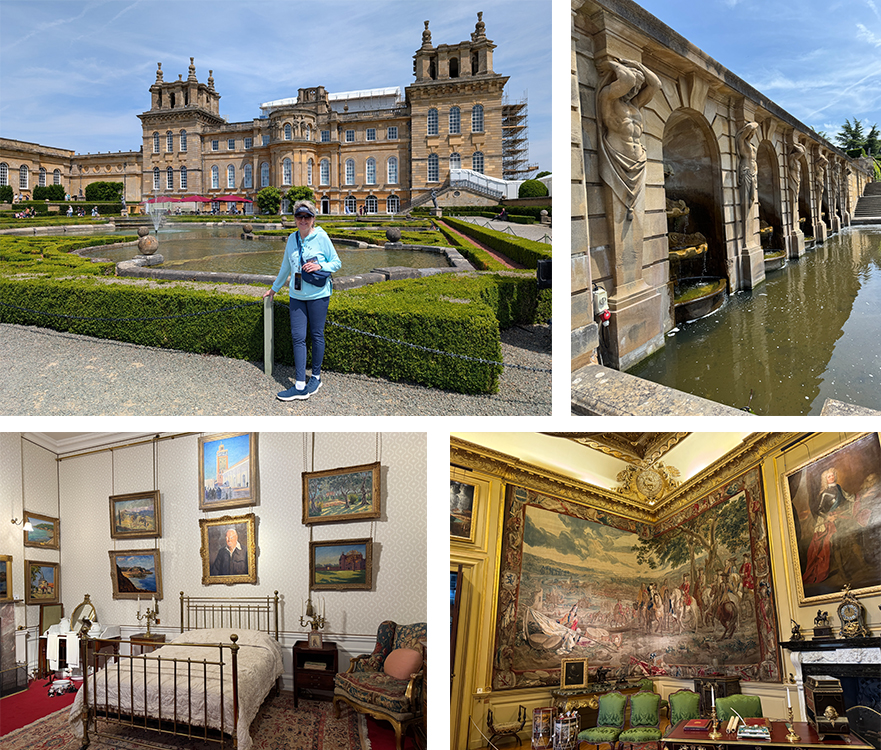
Next, we explored the grandeur of Blenheim Palace, the birthplace of Winston Churchill, and its stunning formal gardens.
Churchill was born here in 1874 in the home of his grandfather, the 7th Duke of Marlborough. It is one of England’s largest homes, built between 1705-1722, and remains the home of the Dukes of Marlborough. In 2025, it marked 75 years since first opening its doors to the public.
Arlington Row in Bibury
A leisurely drive in our mini-coach through the Cotswolds began with a brief stop in Bibury. We photographed its honey-colored stone cottages, built from the native Cotswold limestone. Often described as “the most beautiful village in England,” the most photographed view is of Arlington Row. In the 17th century, they were used as weaver’s cottages, where cloth was made for the nearby mill. Now they are private residences owned by the National Trust; one is available as a holiday rental.

The Manor House Hotel in Moreton-in-Marsh, served as our base for the next two nights.
A Full Day in the Cotswolds: Villages, Hawkstone Brewery, and the Tolkien Door
Day 3:
Chipping Campden
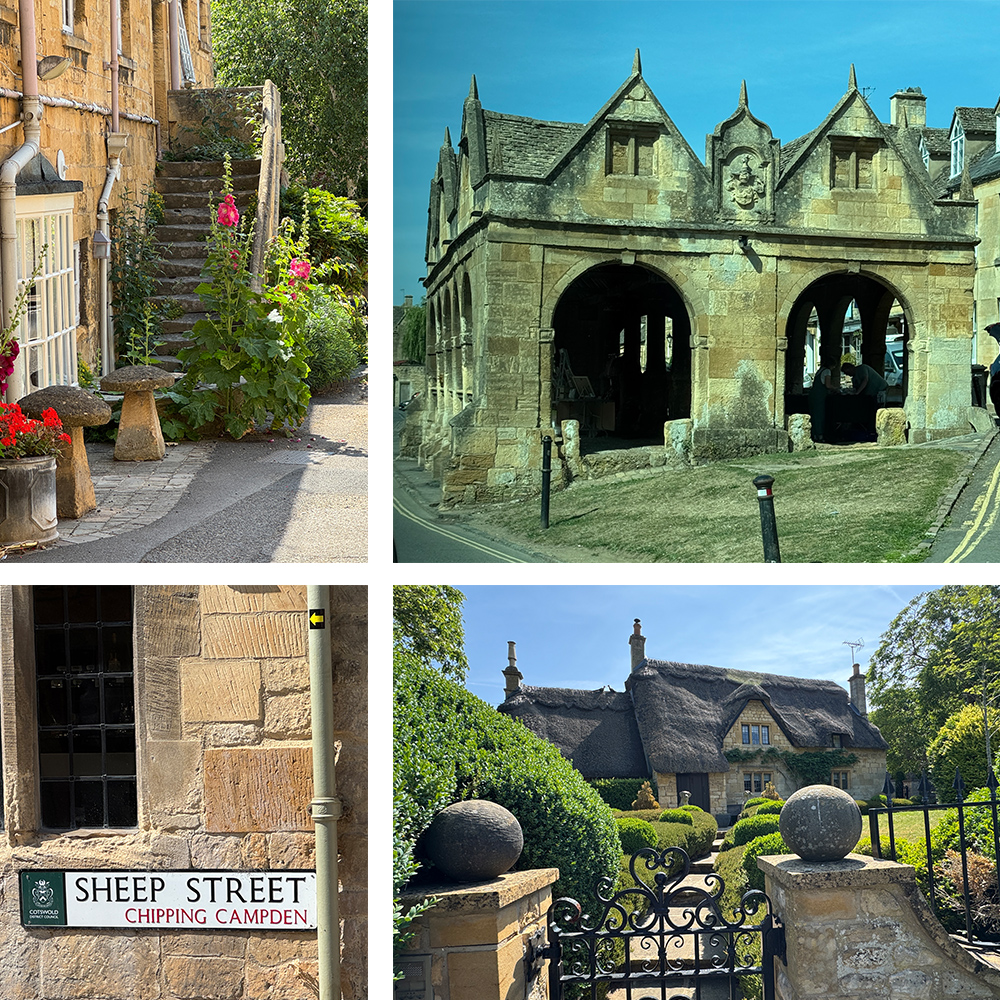
What better way to immerse yourself in the beauty and culture of the Cotswolds than by exploring two more of its most scenic villages? Our first stop was Chipping Campden. The ancient wool town is often often described as “one of the best preserved and most historically important” Cotswold villages. We walked through the surviving Market Hall, built in 1627, before strolling along Sheep Street. It took us past thatched-roof cottages with beautifully landscaped gardens, resembling a Thomas Kinkade painting come to life.
Dover’s Hill
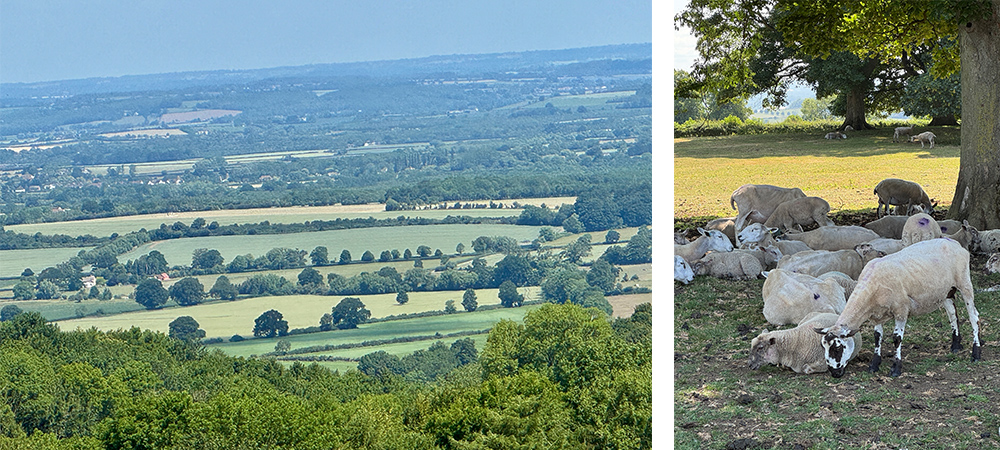
Just outside Chipping Campden, we paused to take in stunning views of the surrounding countryside at Dover’s Hill, a natural amphitheater on a steep slope. A small flock of sheep rested in the shade nearby.
Cotswold Lavender Farm
One of the things I appreciated most about our tour with Adeo was the freedom to make unplanned stops along the way. One example of this was at Cotswold Lavender Farm. During our brief, stop, we were rewarded with views of Broadway and the Vale of Evesham. From mid-June through mid-August, visitors can walk through the lavender fields. They can also visit the Distillery to see how lavender oil is extracted for its products.

Bourton-on-the-Water
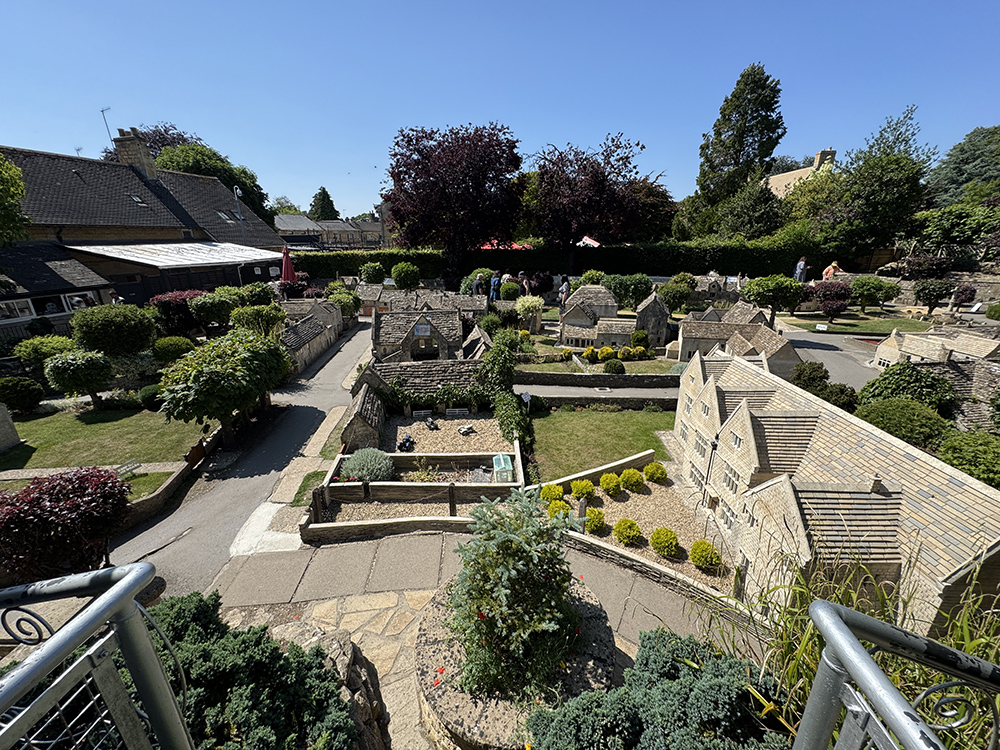
We continued to Bourton-on-the-Water, which has been called the “Venice of the Cotswolds.” It often ranks among the prettiest villages in England. We walked along the footpaths by the River Windrush and crossed several of its five bridges. If you go, don’t miss visiting the Model Village. Built by local craftsmen in the 1930s, it features a 1:9 scale replica of the entire village.

Hawkstone Brewery
My anticipation grew as we neared our next stop, Hawkstone Brewery, just outside Bourton-on-the-Water. Our group was scheduled to arrive for a mid-afternoon tour and tasting. I had become a big fan of Jeremy Clarkson of Clarkson’s Farm fame, who is a major investor and the marketing face of Hawkstone. After tasting its award-winning lagers and ciders, we got a first-hand look inside the brewery. Since 2022, Hawkstone has become the fastest-growing beer in England. It’s now served at more than 2,000 pubs in the UK.

Read more about our visit to Hawkstone Brewery in my article on Food Wine Travel Magazine, “Lagers, Legends, and Jeremy Clarkson: Touring Hawkstone Brewery in the Cotswolds”
https://fwtmagazine.com/lagers-legends-and-jeremy-clarkson-touring-hawkstone-brewery-in-the-cotswolds/
The “Tolkien Door” in Stow-on-the-Wold
One last brief stop remained before returning to our hotel in Moreton-in-the-Marsh. (Don’t you love all these long, hyphenated village names?) Stow-on-the-Wold’s St. Edward’s Church, dating back to the Middle Ages, features a special door on the north porch that has become known as the Yew door or the “Tolkien door.” The arched door, built 300 years ago, is thought to have served as Tolkien’s inspiration for the Doors of Durin, the west gate of Moria, in his book, The Lord of the Rings: The Fellowship of the Ring. The two yew trees that surround it have grown to now become part of the entrance.

Stratford-on-Avon, Chirk Castle, & Chester: A Literary Legend, a Bit of Wales, and a Cathedral City
Day 4:
Stratford-on-Avon

Stratford-upon-Avon is well-known as the birthplace and childhood home of William Shakespeare. After touring Shakespeare’s Birthplace, including the home and its gorgeous gardens, our guide led us on a stroll through the town, pointing out examples of the architectural styles that chart the town’s rich history, from Tudor timber-framed houses to the Victorian Gothic style of the Old Bank Building. Situated on the banks of the River Avon in Warwickshire, it is one of the most-visited places in England.

Chirk Castle
Even though our tour was called “England’s Rustic Charm,” we were able to get in a bit of Wales, too. Chirk Castle, located near the England/Wales border, is a short drive (around 30 minutes) from Chester, our final destination for the evening.
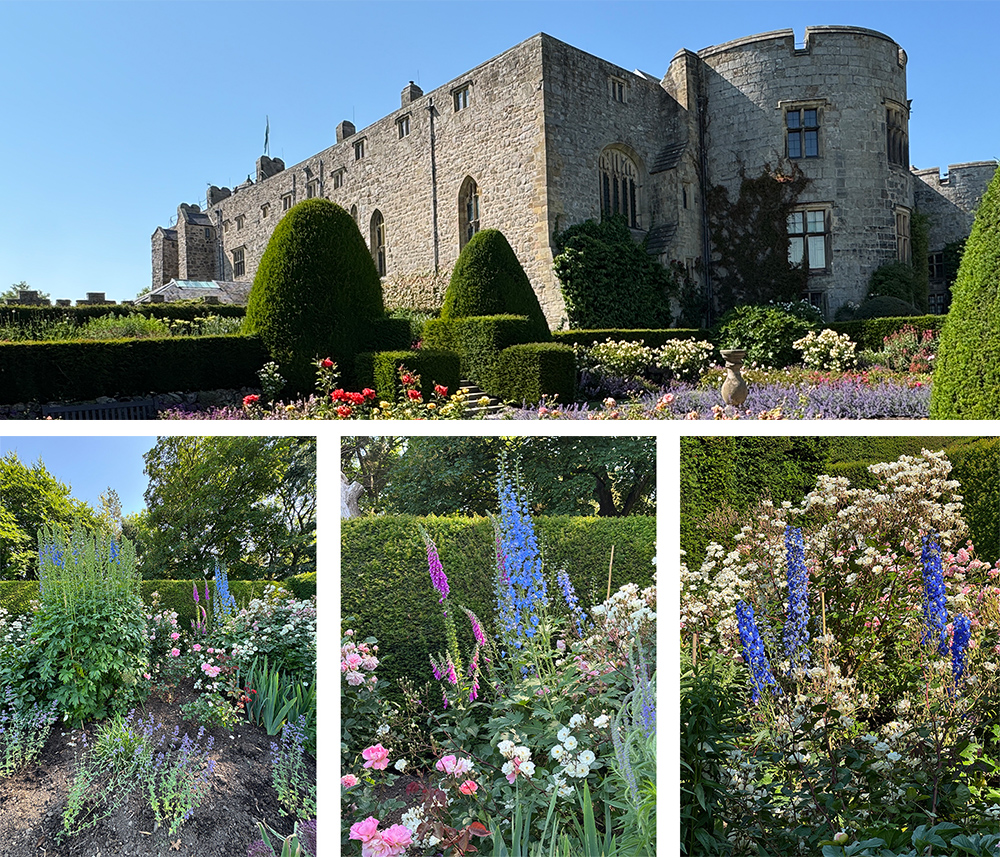
The medieval fortress, built in 1295 by Roger Mortimer de Chirk, served as the residence of the Myddelton family for over 400 years. The National Trust now owns it. After walking through the award-winning gardens, which cover more than five acres, we climbed the Adam Tower. Its turret clock, medieval toilets, and dungeons were the main points of interest.
Our final destination on day four was The Queen Hotel in the cathedral city of Chester, which first opened its doors in 1860.
Day 5:
Chester and Chester Cathedral
Founded in 79 AD as a Roman fort, Chester is one of the best-preserved walled cities in England. Our walking tour led us past the East Gate Clock, at the main entrance into the walled city. It is said to be the most photographed clock in the UK after Big Ben.
We spent the rest of our time at Chester Cathedral, founded in 1092 as a Benedictine Abbey. It later became a cathedral in 1541, after King Henry VIII took control during the Dissolution of the Monasteries. While not the most ancient, it was developed over centuries. The cathedral shows elements from Norman through Early English, Decorated, and Perpendicular Gothic styles, all in one structure.

Quarry Bank Mill
On the way to Grasmere, our final destination on day five, we visited Quarry Bank Mill near Manchester. It is the site of a former cotton mill, founded in 1784, that has been operated by the National Trust since 1939. Recognized as one of the best-preserved industrial sites from the English Industrial Revolution, it functions as a museum where visitors can observe both the machinery and the social history of mill life in the 19th century. We watched live demonstrations of machinery to see how raw cotton was spun and woven into fabric.

William Wordsworth Gravesite
As we approached Grasmere, in the heart of the Lake District National Park, the scenery shifted from rolling countryside to more mountainous terrain. Grasmere is well-known for its proximity to Lake Grasmere, scenic walking trails, and its literary ties to the poet William Wordsworth.
Before checking into the Rothay Garden Hotel, our home for the next two nights, we stopped by the churchyard of St. Oswald’s Church to visit his grave, located behind the church. It is marked by a simple headstone inscribed with his name and the year of his death, 1850. The graves of his wife Mary, sister Dorothy, several of his children, and other family members are nearby.

A Full Day in the Lake District: Lakeside Views, Mining Heritage, and Ancient Stone Circles
Day 6:
Thirlmere Reservoir and Honister Slate Mine
On our first full day in the Lake District, we visited Thirlmere Reservoir, just beyond the iconic Ashness Bridge, where we enjoyed the breathtaking panorama known as “Surprise View.” From there, we traveled to the historic Honister Slate Mine at the summit of Honister Pass. It’s England’s last working slate mine. Visitors can take a guided mine tour, to explore deep underground and learn about the fascinating history of the Westmorland Green slate that dates back over 450 million years. Or, book one of several adrenaline activities, such as crossing the 1,000-foot-high Infinity Bridge, or tackling underground climbs and zip lines.

Boat Ride on Derwent Water
It was a beautiful day for a scenic boat ride on Derwent Water, often called the “Queen of the Lakes,” which was next on our itinerary. The Keswick Launch Company’s charming wooden boats depart regularly—every half hour during the summer—for a roughly 50-minute cruise around the lake. With eight different landing stages, including the main stop at Keswick, passengers have the flexibility to disembark, explore on foot, and rejoin the launch later.

Keswick and the Derwent Pencil Museum
After the cruise, we explored the vibrant market town of Keswick, then stopped for lunch at a downtown pub. “Fish and chips, please!” When our group learned the Derwent Pencil Museum in Keswick was home to the world’s largest pencil, we just had to see it for ourselves. It turned out to be a fascinating, spur-of-the-moment stop that wasn’t on our planned itinerary. Derwent, with a heritage dating back to 1832, began producing pencils in Keswick, Lake District, leveraging the region’s rich graphite deposits to establish the UK’s first pencil factory.
Castlerigg Stone Circle
Our day concluded with a visit to Castlerigg Stone Circle, one of Britain’s most significant prehistoric stone circles, before returning to our hotel in Grasmere. It’s among the earliest British circles, dating back to the Neolithic period. We happened to be visiting on the day after the Summer Solstice, which attracts a larger-than-usual number of visitors who arrive the night before and stay to greet the sunrise.

The Yorkshire Dales: From Creameries to Cathedrals
Day 7:
Wensleydale Creamery
After a fortifying full English breakfast at our hotel in Grasmere, we boarded our mini-coach for a drive through the countryside to reach Wensleydale Creamery near Hawes in the Yorkshire Dales. We passed fields with “black-and-whites,” the Holstein-Friesian dairy cows, which supplies milke for the creamery’s cheese-making process. The dry-stone walls marking off the fields were more in evidence, too — a distinctive, historic feature of the landscape.
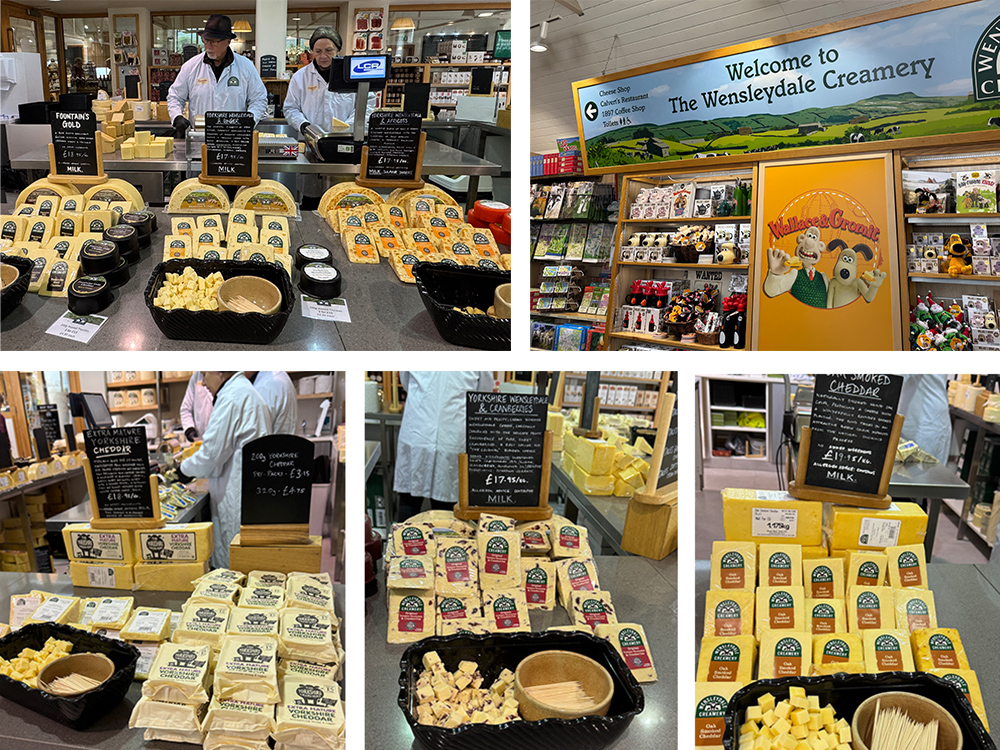
I never met a cheese I didn’t like, so sampling many of its 20 varieties of award-winning artisan cheese at Wensleydale Creamery was a pleasure. Our guide suggested we choose a few of our favorites to purchase for snacking later in our hotel room, along with a selection of crackers. While we weren’t able to stay to watch a cheese-making demonstration, visitors can book an experience that include the demonstration, tasting, and self-guided tour.
Aysgarth Edwardian Rock Garden
The Aysgarth Edwardian Rock Garden has been called a “hidden gem,” for good reason. Located near Hawes in the small village of Aysgarth, the rock garden is accessible through a wrought-iron gate. Between 1906-1914, it was built as a walk-through grotto, using limestone rocks from a nearby moor, filled with 300 varieties of succulents, ferns, and alpine plants. We walked through its winding paths, under rock arches, and used a strategically placed bench as a place to rest and take photos. A restoration project was completed in 2003.

Fountains Abbey
We headed next to Fountains Abbey near Ripon in North Yorkshire. Founded in 1132 by 13 Benedictine monks from St Mary’s in York, it is the largest monastic ruin in England. We learned it was one of the most profitable abbeys in England until it was closed in 1539 during the Dissolution of the Monasteries ordered by Henry VIII. The estate was sold by the Crown to a merchant and remained in private hands until the 1960s. Since 1983, it has been in the hands of The National Trust.

Afternoon Tea at The Grand in York
The “quintessentially British” Afternoon Tea at The Grand Hotel in York awaited us next. We checked into York’s only 5-star hotel and made our way to the dining room to be seated. Its Afternoon Tea was named Conde Nast Johansen’s Best Afternoon Tea. (Optional Champagne and English Sparkling wine can be added as an upgrade.) We were able to take a few of the savory and sweet delights back to our hotel room to enjoy later with our Wensleydale cheese and crackers we’d purchased there earlier that day.

Walking Tour of York
An early evening walk in York with our guide was a great way to end day seven of our small group tour. Passing York Minster, which we would tour the next day, along the City Walls, and through The Shambles district were highlights. The Shambles is a narrow, historic street with buildings dating back to the 14th century. Many used to be butcher’s shops, but today it’s a popular tourist area with gift shops, cafes, pubs, and chocolatiers.

Day 8:
Castle Howard
The final day of our tour with Adeo Travel began with a short drive outside the city of York to reach Castle Howard. The castle has been home to the Howard family for more than 300 years. Still privately owned, it has served as the filming location for Bridgerton, Brideshead Revisited, and other TV productions and movies.
After several years of renovation, Castle Howard’s 21st-century Renaissance had recently been completed before our visit. Called a “once-in-a-generation transformation,” it included the unveiling of the lost Tapestry Drawing Room (pictured above, center). It’s now been restored to its 18th-century grandeur following a devastating fire in 1940.

York Minster
We couldn’t leave York without touring York Minster, considered one of the most important cathedrals in Britain. The original church on the site dates to 627, when King Edwin of Northumbria was baptized there. Its Great East Window is the largest expanse of medieval stained glass in the world.

We climbed the Central Tower (275 steps) to reach the highest point in York and take in the 360-degree views of the city. More than 2 million visitors are welcomed to York Minster annually.

Our 8-day Tour Ends, But Our Travels Continue…
Our group of 10 gathered for a final dinner that evening in the dining room of The Grand, concluding our eight-day England’s Rustic Charm tour. We met up again the following morning for breakfast, where we said our goodbyes and exchanged contact information to ensure we can stay in touch.
More Yorkshire Dales: “All Creatures Great & Small”
Day 9
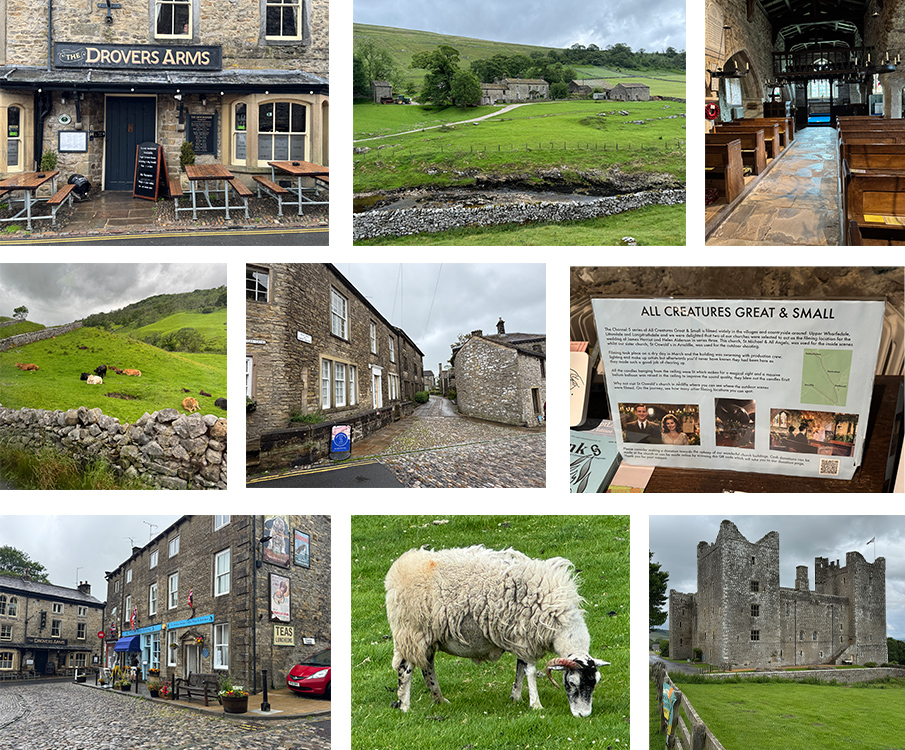
On day nine of our 12-day England adventure, we planned to explore more of Yorkshire on an all-day tour with Mountain Goat Tours. James Herriot and the PBS series, “All Creatures Great & Small,” was the focus. In my early adulthood, I read four of the James Herriot books. They included All Creatures Great and Small, All Things Wise and Wonderful, All Things Bright and Beautiful, and The Lord God Loves Them All. James Herriot’s adventures as a Yorkshire vet in the 1930s have been featured to date in two adaptations on PBS. The earlier version was in the 1980s, which I also recall watching. My husband and I have been huge fans of the new adaptation of the PBS series, too, since it premiered in 2020.
Mountain Goat’s “All Creatures Great and Small” tour is described as “journey through the heart of Herriot country.” We first visited the village of Grassington, the filming location for “Darrowby” in the series. We traveled on to the church used for interior filming, where James and Helen were married. Helen’s family farm, Heston Grange, was next. (I loved seeing all the sheep!) Our last stop was Castle Bolton, where the real-life James Herriot (Alf Wight) proposed to his wife. Being able to visit these key locations from the series was the ideal way to finish out our time in the Dales. As one of the locals might say, “it was the best bit by a long chalk” (an old Yorkshire saying meaning “by far the best part”).
London: Towers, Tours, and Hidden War Rooms
Day 10

We arrived in London from York, a two-hour journey by train. We then took the Underground (also known as The Tube) to Tower Hill station. Our hotel, Tower Suites by Blue Orchid, was just around the corner, near the Tower of London and Tower Bridge.
Tower Bridge
After settling into our room, we found a great place for lunch and then spent the afternoon touring Tower Bridge. First opened in 1894, it is one of the most recognizable bridges in the world. In 1982, it opened to the public for the first time since 1910, featuring a permanent exhibition. I was looking forward to walking on its glass walkway, 138 feet above the street and the Thames River. Some visitors find nerve-wracking, but I loved it! It was fun to look down and see passing boats and pedestrians right beneath our feet.
Day 11
Tower of London
If you only have time to visit one historic site in London, choose The Tower of London. The historic fortress on the north bank of the River Thames was built in the 1070s by William the Conqueror. It took 20 years to complete, but was later expanded by Henry III and his son Edward I in the 1200s. In order to be among the first in line to see the Crown Jewels, we arrived right at opening time. We spotted one of the Tower’s eight ravens on our way to the “Royal Beasts” exhibition in the Brick Tower. Learning about the menagerie of animals kept in the Tower for more than 600 years (1200s to 1835) was fascinating.
Also included in admission is a historical tour with one of the Yeoman Warders (Beefeaters). They begin near the main entrance or the Bell Tower, every 45 minutes. Our tour was with one of the six female Yeoman Warders serving at the Tower as of 2025. Tracey Machin was the first nurse to become a Yeoman Warder (after serving 23 years in the Royal Air Force).

Hop-on Hop-off Bus Tour
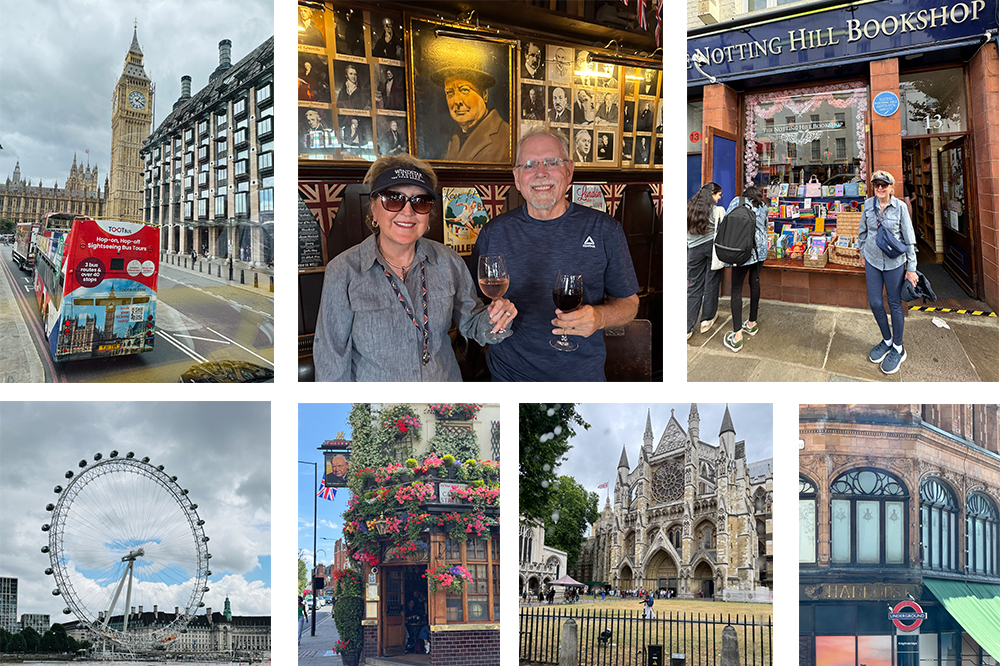
Our afternoon Big Bus Hop-on Hop-off Bus tour took us from a pick-up point near the Tower of London into Central London. We passed well-known landmarks and attractions, including the London Wheel, Big Ben, Parliament, Westminster Abbey, and Harrod’s department store. As we reached Notting Hill in West London, we passed a pub, The Churchill Arms. Its eye-catching flower-covered exterior led us to make a decision to exit the bus at the next stop. We walked back to it for a drink and a look around. Built in 1740, Winston Churchill’s grandparents were regular visitors in the 1800s. Next, we walked through Notting Hill neighborhoods to find the Notting Hill Bookshop. Fans will remember it was a setting in the Hugh Grant and Julia Roberts movie, Notting Hill (1999).
Day 12

Churchill War Rooms
The Churchill War Rooms, located in London’s Westminster area, was first on our agenda for our final day in London. We arrived early, to build in time to walk by Buckingham Palace and take a stroll through St. James’ Park. We arrived at the War Rooms entrance before our 10 am admission time. It’s one of the top things to do in London, for good reason. It’s a bit surreal to walk through the corridors and historic rooms of this secret, underground headquarters used by Prime Minister Winston Churchill and other officials. They served as Britain’s Cabinet War Rooms from August 27, 1939, and throughout the Second World War until August 1945, after the surrender of Japan. It’s amazing to know they have been left as they were the day the lights were turned off. The Churchill Museum, exploring all aspects of Churchill’s life, is fascinating, too.
Jewel Tower
We arrived at Westminster Abbey in the afternoon, hoping to tour it. However, we found that no more tickets were available for the rest of the day. Lesson learned: book ahead. Instead, we walked around the corner and toured a lesser-known attraction, the Jewel Tower.

Built in 1365 as the “Jewel House,” it was originally used to safeguard Edward III’s silver plate and world treasures. It later held records from the House of Lords. Until 1995, it served as the National Weights and Measures Office, determining the value of weights and measures for Britain and its empire.
Goodbye, England…Pip Pip, Cheerio!
This was not only our final day in London, but it was the last day of our 12-day journey exploring England’s history, countryside, and culture. More stories are still to be told from our 8-day small group tour, our extra day of touring on the “All Creatures Great and Small” tour, and our three days in London. (I’ll be adding links to those stories as they are published.)
Map of the “England’s Rustic Charm” Itinerary
In case you may be interested in planning your own trip to discover England’s Rustic Charm, here is a map of our itinerary. There may be slight changes made by Adeo for 2026 and 2027, as accommodations and plans to visit attractions can sometimes be altered. (Note: This was a personal trip. I have no financial benefit from bookings and did not receive discounts or compensated travel benefits.)

Many thanks to adeo Travel for working with me to coordinate, plan, and curate our ideal 12-day journey to England. Besides our small group tour, which included all hotel arrangements, admissions to all attractions, and many meals, arrangements were made for our extra day in York. The “All Creatures Great and Small” tour, BritRail passes, hotel accommodations for our three nights in London, and 2-day London Sightseeing Passes were also included. Everything was “spot-on.” It was a pleasure to work with you.
What a brilliant post, ideal for anyone who hasn’t visited England. Thanks for bringing back memories of Oxford, where I lived for a year. Hopefully I can explore more of England soon!