
Tropical Travel Girl
Walking in James Herriot’s Footsteps: An “All Creatures Great and Small” tour through the Yorkshire Dales
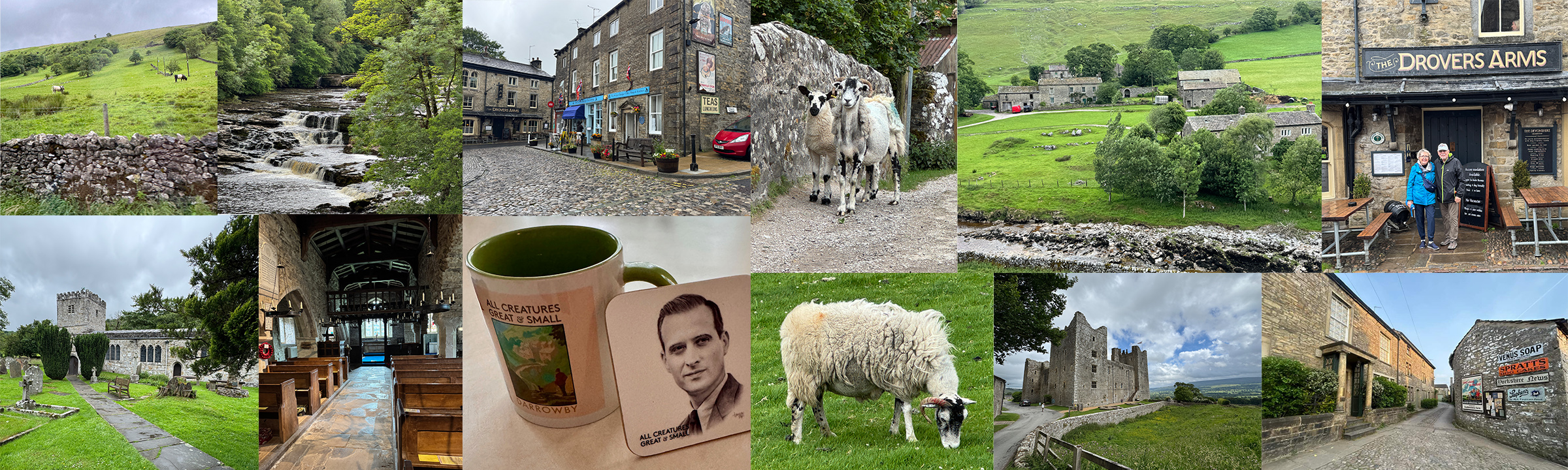
Long before I ever set foot in England, I came to know the Yorkshire Dales through the eyes of a country vet named James Herriot. First through his books, and later through two beloved PBS adaptations of All Creatures Great and Small, his stories shaped my image of rural England as a place of quiet beauty, hard work, and warmth. Seeing those landscapes in person was a long-held wish—and one unforgettable day made it a reality.
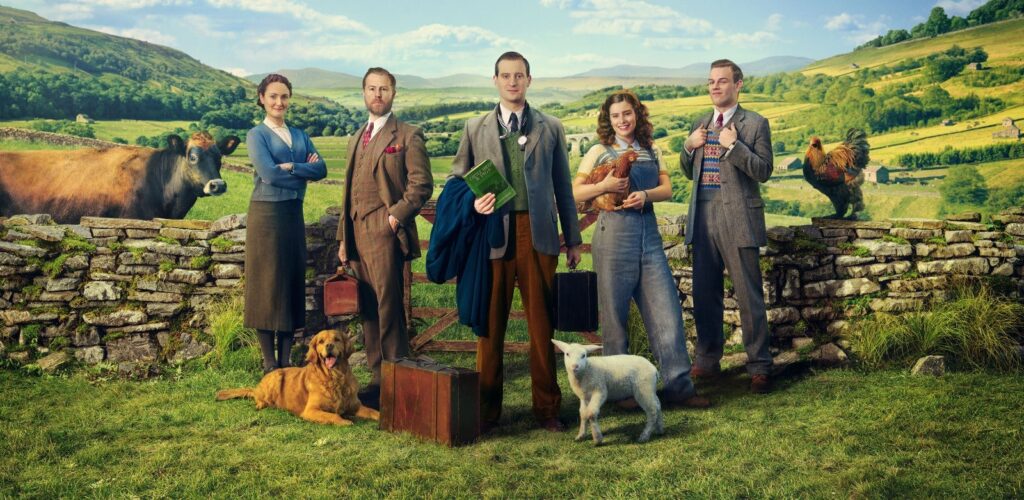
To experience that world more fully, I joined a full-day “All Creatures Great and Small” tour with Mountain Goat Tours, departing from York and heading straight into the Yorkshire Dales. Designed to follow in James Herriot’s footsteps, the small-group tour connects filming locations with the real villages, churches, and farms that inspired his stories. It quickly became clear this wasn’t simply about recognizing scenes from a television series—it was about understanding the rhythms of a landscape that shaped both the fictional Darrowby and the real life of Alf Wight.
Grassington: Welcome to Darrowby
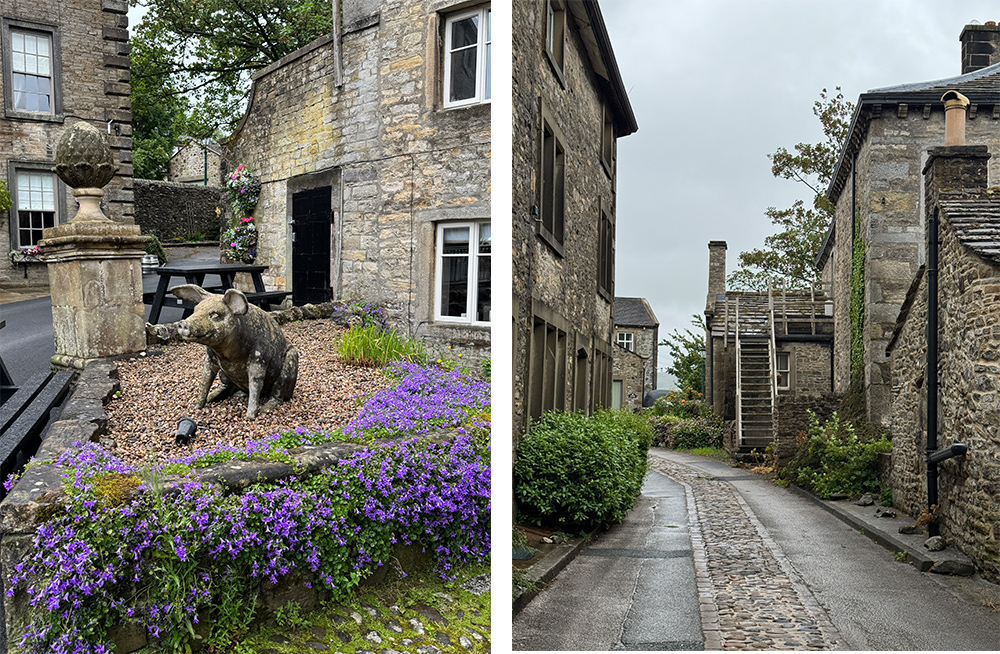
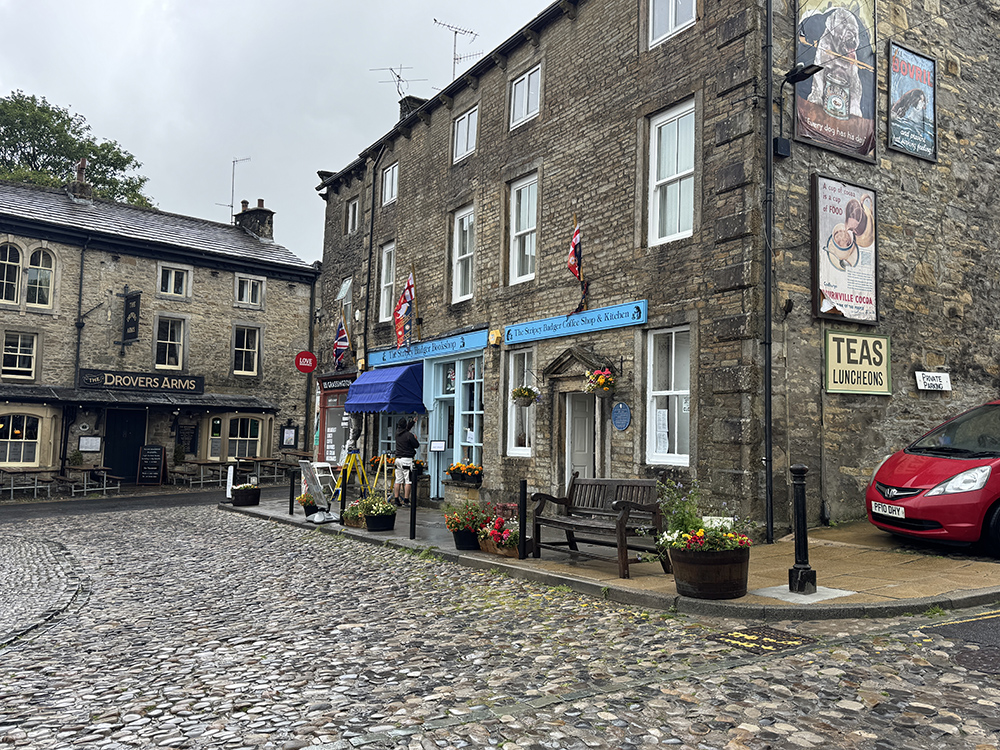
Our first stop was the picture-perfect village of Grassington, which serves as “Darrowby” in the current adaptation of All Creatures Great and Small. With its cobbled Market Square, honey-colored stone buildings, and flower boxes spilling over with summer blooms, it requires very little imagination to see why producers chose it as the heart of Herriot country.
©Debbra Dunning Brouillette
We visited in June, several months after filming for the most recent season had wrapped. While the camera crews were long gone, it was easy to spot familiar façades. A building along the square is transformed into the exterior of Skeldale House, the veterinary practice where James begins his career.
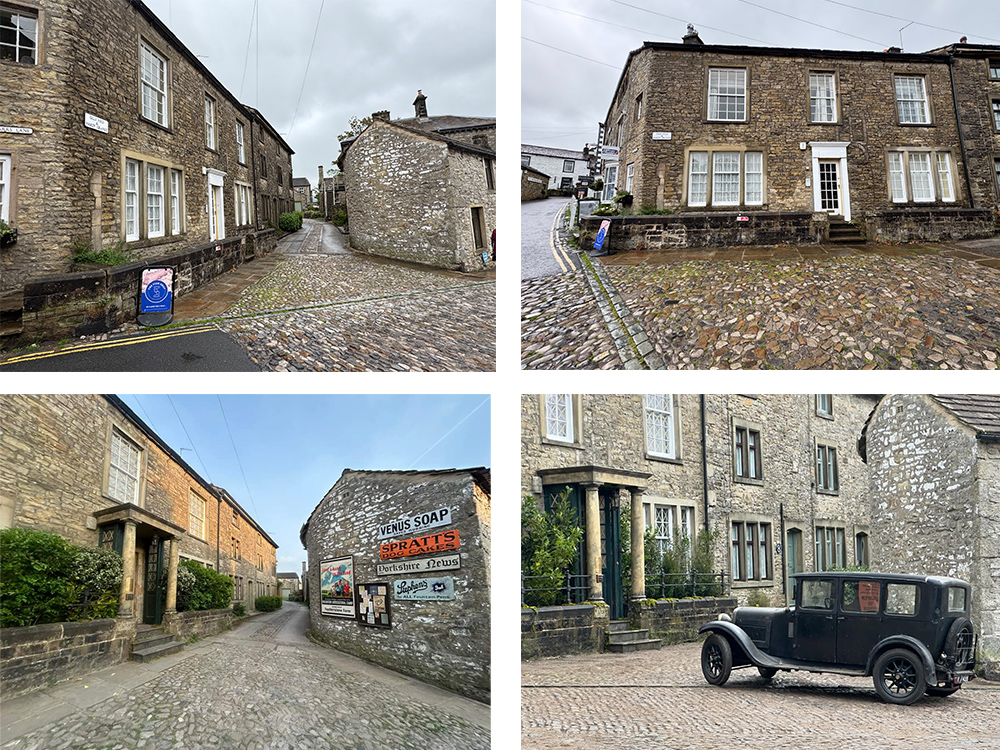
A porch area with columns is added for filming, and signage is added to the building across from it.
The bottom two images were sourced from Visit Grassington.
Just across the way stands The Devonshire Grassington, which doubles as the Drovers Arms in the series — its traditional frontage instantly recognizable to fans.
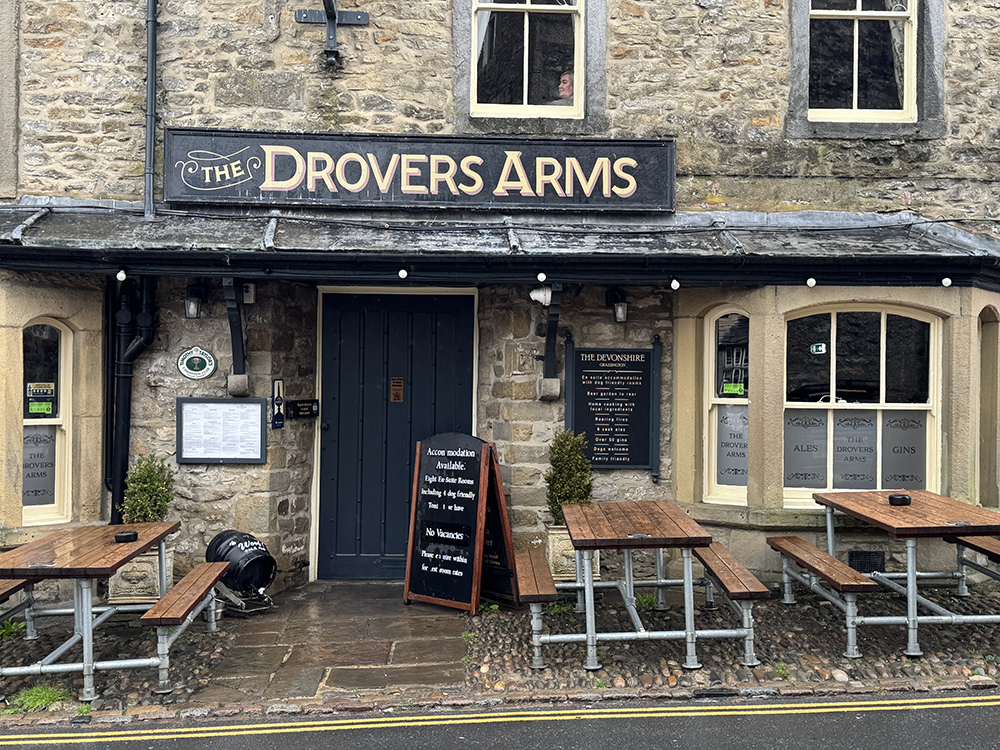
©Debbra Dunning Brouillette
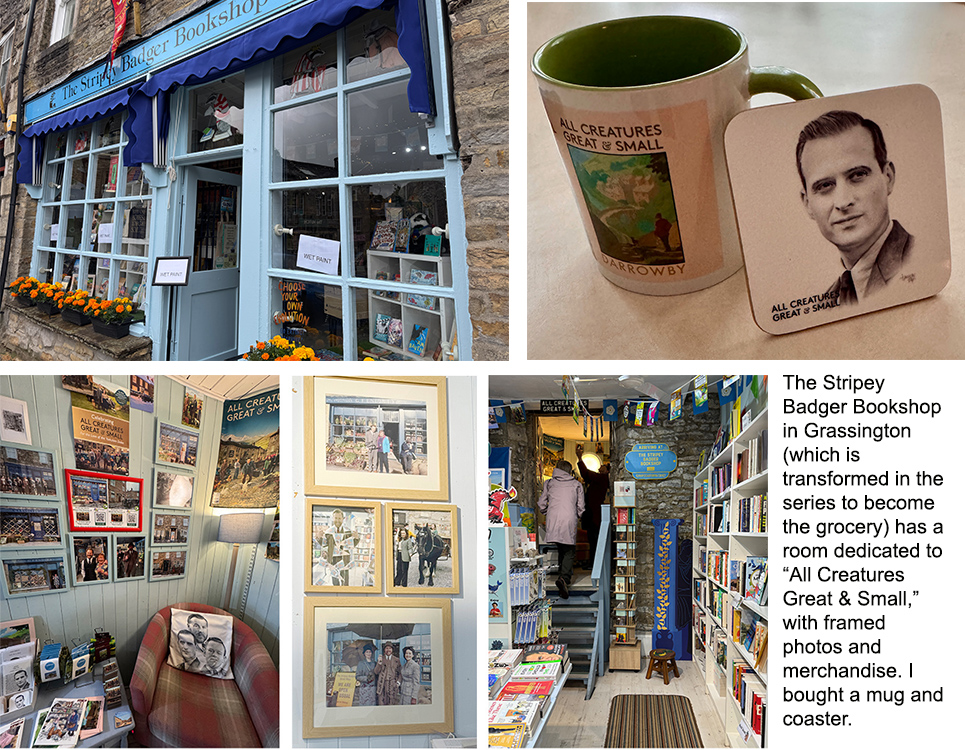
Storefronts Change for Filming
Not every scene, however, is filmed exactly where it appears to be. Interior pub scenes are shot at the historic Green Dragon Inn, a 13th-century inn near Hawes whose low beams and centuries-old stone walls lend authenticity to the show’s cozy atmosphere. Elsewhere in the square, the cheerful Stripey Badger Bookshop is temporarily transformed into G. Fendleby Grocer during filming — one of several clever storefront changes that allow modern Grassington to slip convincingly into its 1930s role.
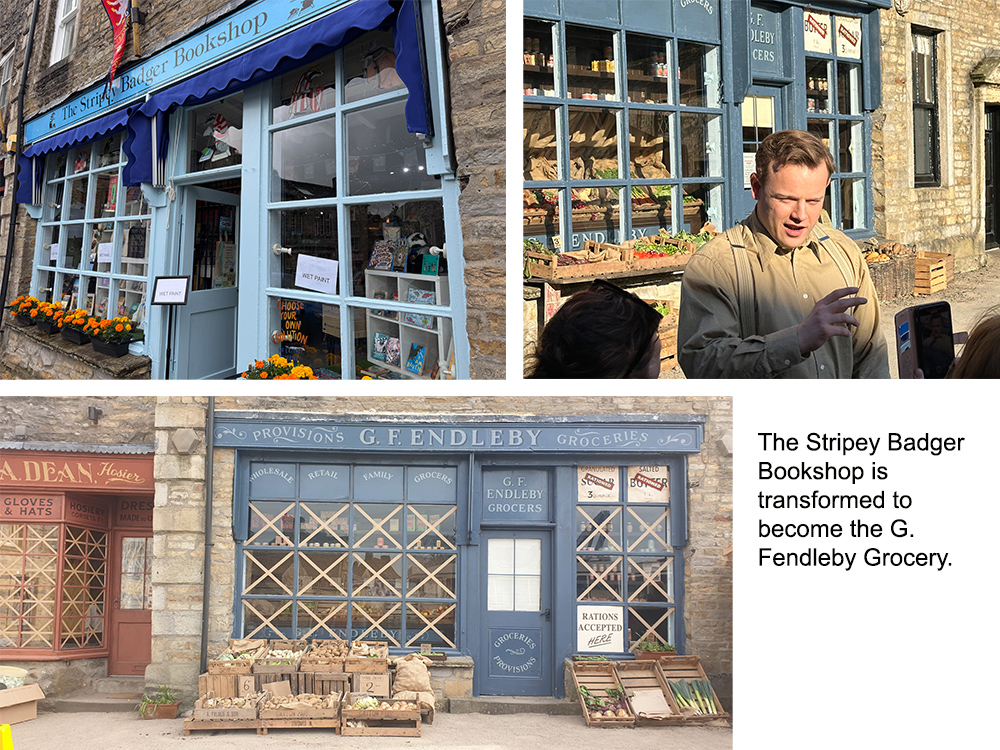
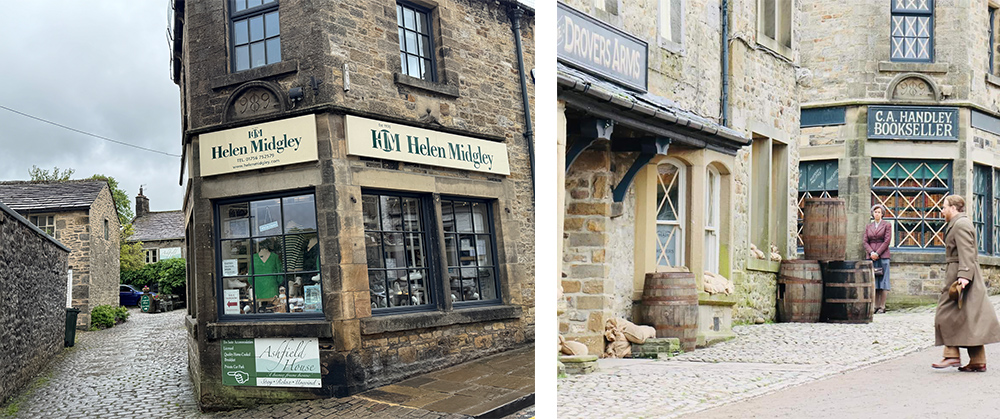
Production crews reportedly remove contemporary signage, conceal modern fixtures, and even cover road markings to preserve the period illusion. Standing there on an ordinary summer morning, it was fascinating to imagine the square buzzing with vintage cars, livestock trailers, and actors in tweed and flat caps — a quiet Yorkshire village momentarily stepping back nearly a century.
While Grassington now plays Darrowby on screen, the original Skeldale House was located in Thirsk, where James Herriot—known in real life as Alf Wight—practiced for decades.
Thirsk: Location of Herriot’s Original Veterinary Practice
On my first trip to England in 1991, long before the current adaptation existed, I made a point of driving through Thirsk just to glimpse the original surgery. As I stood outside with a small group of fellow admirers, a man stepped out to retrieve something from his car. Someone quietly said, “That’s Donald Sinclair.” Sinclair, Herriot’s longtime partner in practice, later served as the inspiration for the character Siegfried Farnon in All Creatures Great and Small. It was a fleeting moment, but knowing I had just seen a living link to those beloved stories added an unexpected layer of connection to a world I already cherished.
World of James Herriot Museum in Thirsk
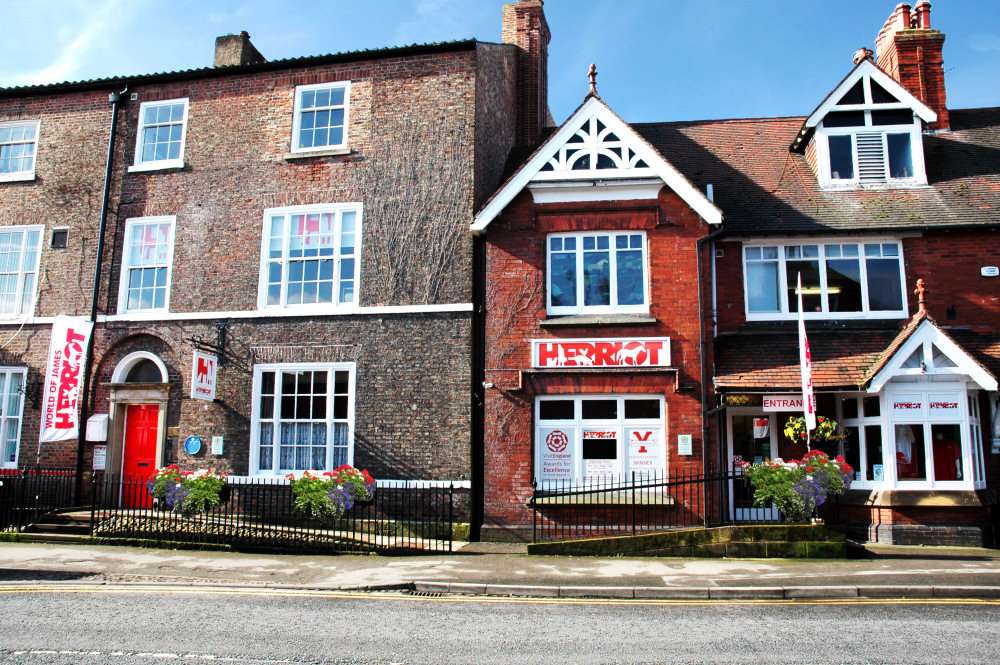
If time allows on your trip to England, spend another day in Thirsk, where you can tour the World of James Herriot Museum, the original 1940s home and fully restored surgery, dispensary, and living rooms where Alf Wight (the real James Herriot) actually lived and worked.
A Sacred Setting: James and Helen’s Wedding Church
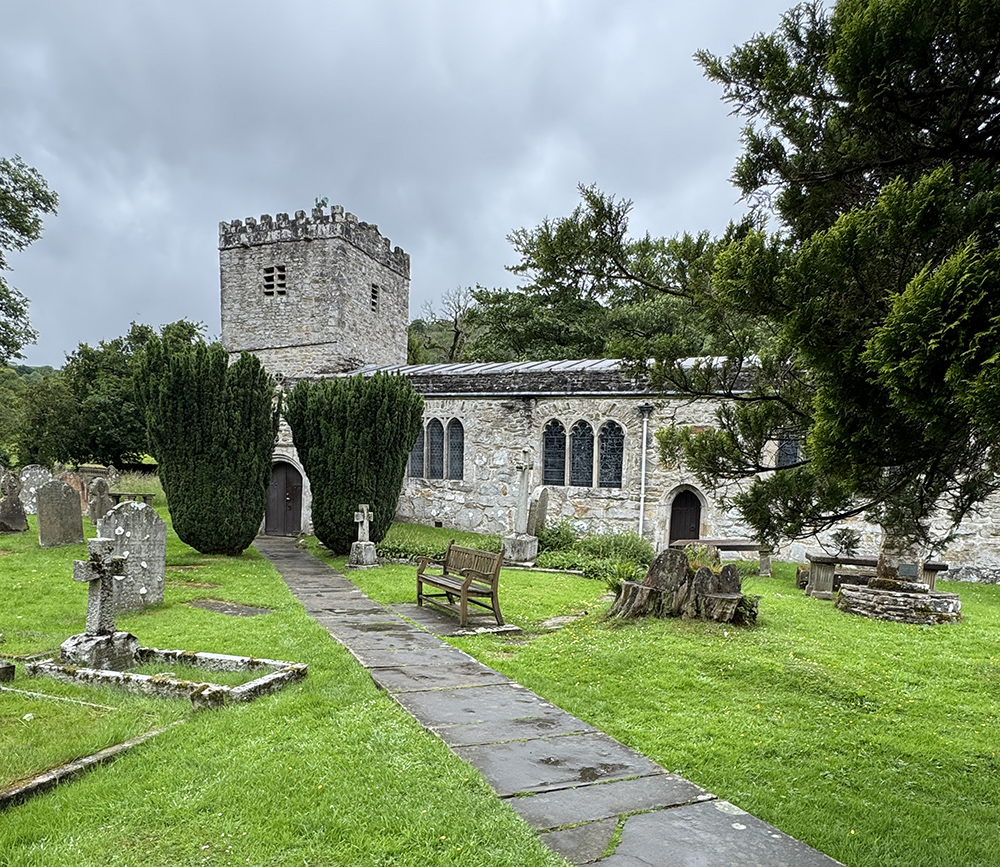
From Grassington, we followed winding country roads deeper into the Dales to the tiny hamlet of Hubberholme, where we stepped inside St. Michael and All Angels Church. It was here, in the current adaptation of All Creatures Great and Small, that James and Helen exchanged their wedding vows in Episode 1 of Season 3.
The church interior is modest and intimate, with whitewashed walls, worn stone floors, and centuries of quiet devotion lingering in the air. Our guide pointed out several notable features, including the remarkable Rood Loft — a wooden platform separating the nave from the altar. Dating back to 1558, it is one of only two surviving rood lofts in all of Yorkshire, a rare remnant of pre-Reformation church architecture.
The other interesting feature are the mice carved into several of the pews by Robert Thompson, a Yorkshire furniture maker who became known as the “Mouseman of Kilburn.” After a conversation about being “poor as a church mouse,” he began incorporating mice into his furniture designs from then on.
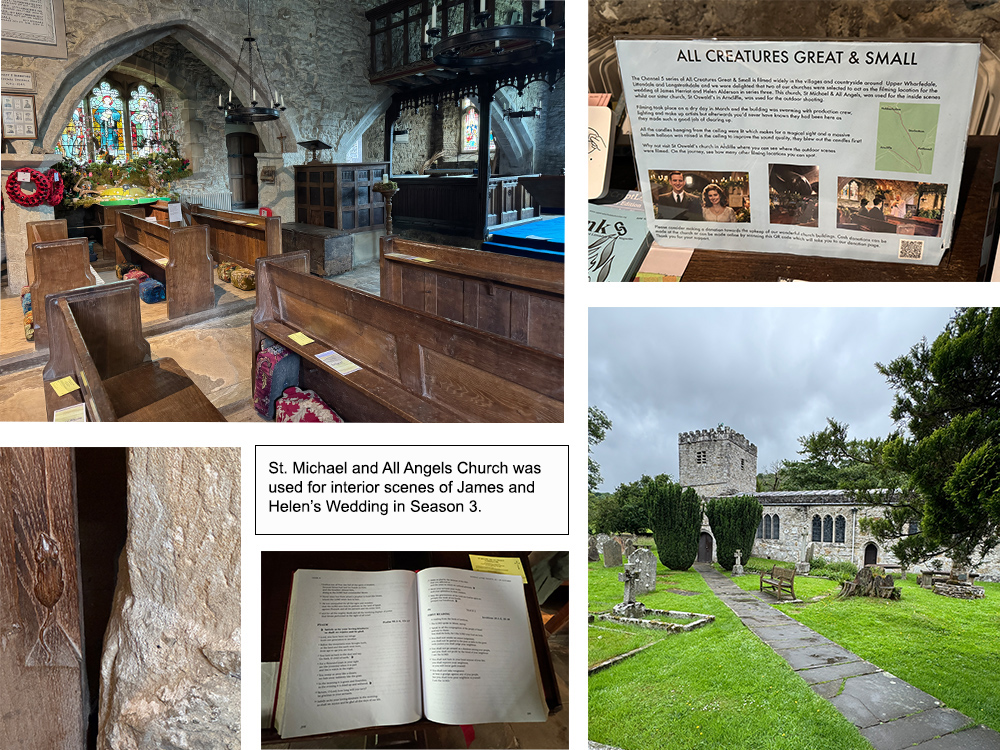
(Note the carved mouse by Robert Thompson, the “Mouseman of Kilburn” at bottom left.)
©Debbra Dunning Brouillette
While we were fortunate to visit the interior filming location, we did not stop at St Oswald’s Church, which was used for exterior shots of James and Helen’s wedding at the beginning of Season 3. Even so, being inside the space where that fictional ceremony unfolded on screen felt surprisingly moving — a moment when television storytelling and real history intertwined in the most unexpected way.
Yockenthwaite Farm: Helen’s Family Home
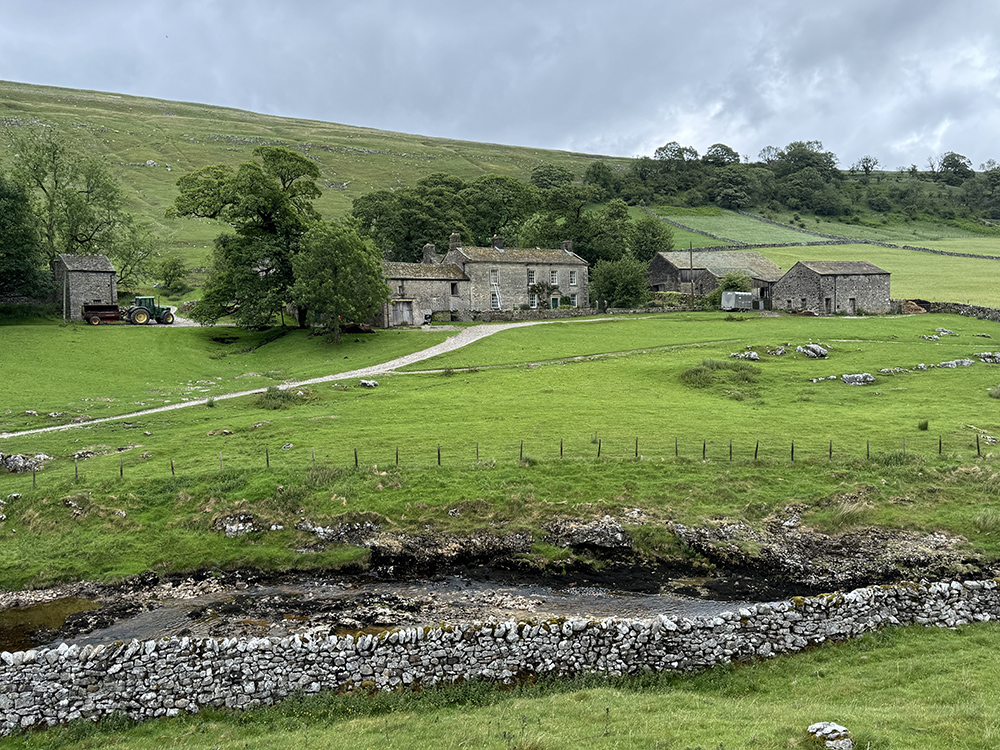
Not far from Hubberholme, we stopped at Yockenthwaite Farm, which serves as Heston Grange, the Alderson family home in All Creatures Great and Small. Set against a backdrop of sweeping green fields and dry-stone walls, the farm feels wonderfully unchanged by time.
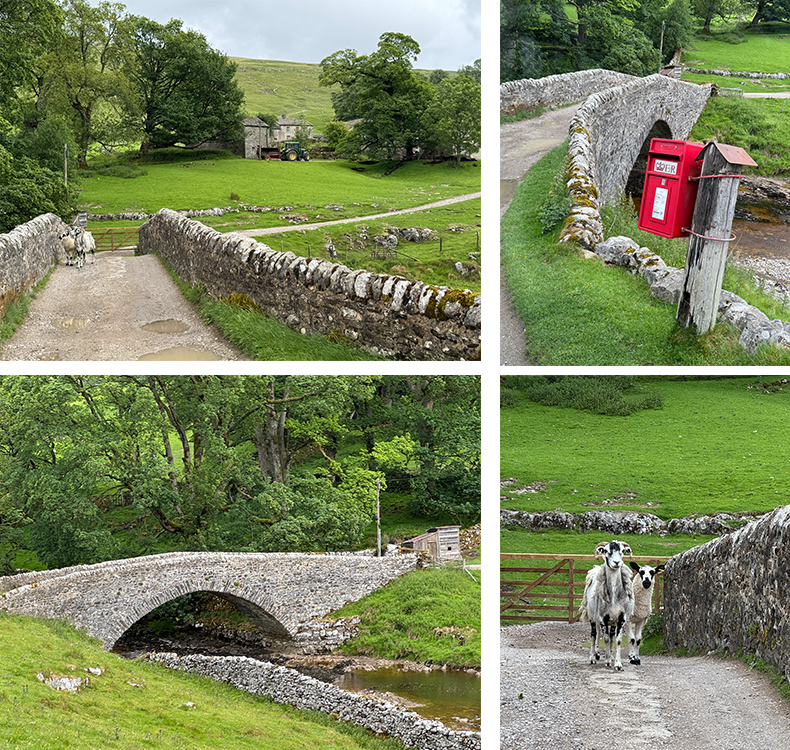
A narrow stone bridge crosses the beck leading toward the property, and I couldn’t resist walking out onto it. Halfway across, I was met by two sheep ambling toward me from the opposite side, completely unbothered by my presence. I love sheep, so this small encounter felt like a gift — a perfect Yorkshire welcome. For a moment, it wasn’t hard to imagine Helen, her father, and sister striding across the fields, skirts and jackets catching in the breeze, heading home over the same bridge.
Unlike some filming locations that seem staged or cordoned off, Yockenthwaite maintains its authenticity as a working farm. The landscape itself — rolling hills stitched together with centuries-old stone walls — does most of the storytelling.
Yockenthwaite Stone Circle
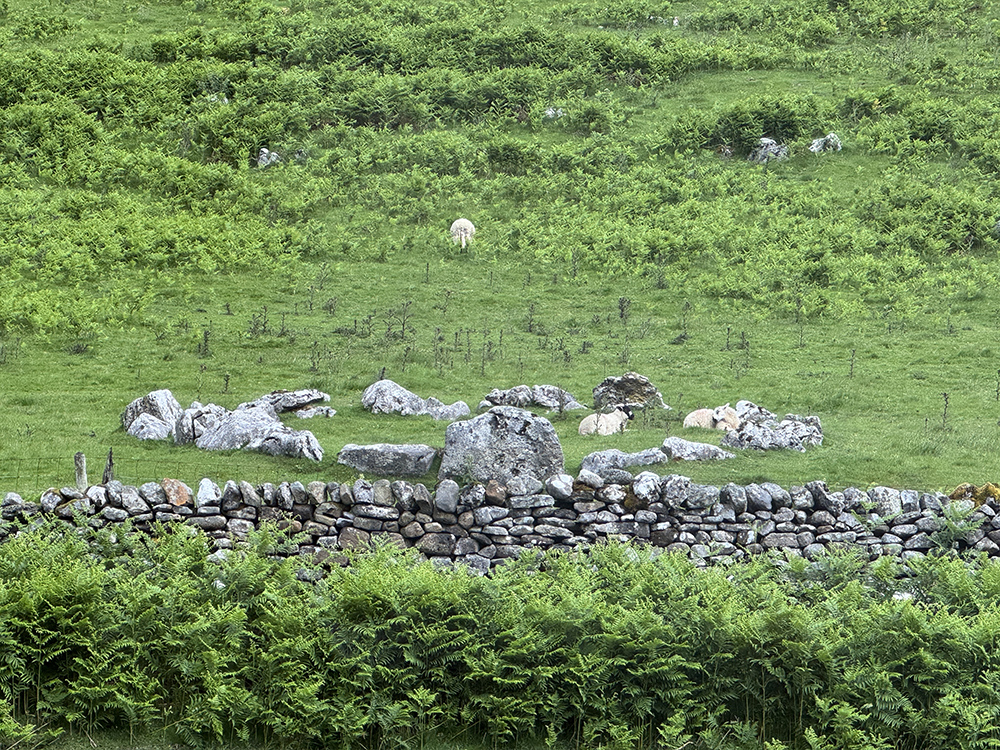
Near the farm sits the Yockenthwaite Stone Circle, a prehistoric monument of 24 small stones arranged in an almost perfect ring. Although often called a stone circle, historians think it might actually be a Bronze Age ring cairn, with its kerbstones still clearly visible against the surrounding moorland.
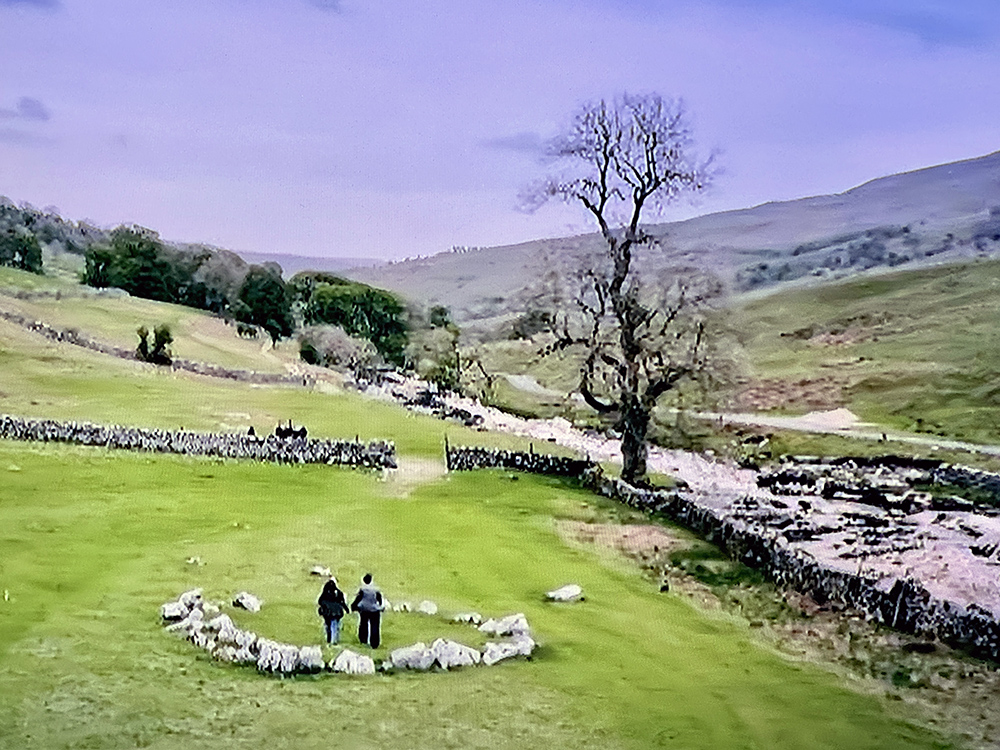
While watching the recent PBS Special, Seasons of the Dales, about the All Creatures Great & Small series, I was able to do a quick screen capture of two people (James and Helen, perhaps?) walking inside the Yockenthwaite Stone Circle. I am not sure which episode it was from, but it was a surprise to see it, and know I had been there!
As we continued toward Hawes, the drive offered one sweeping view after another of the Yorkshire Dales countryside, where centuries-old dry stone walls divide rolling pastures filled with sheep and cattle.
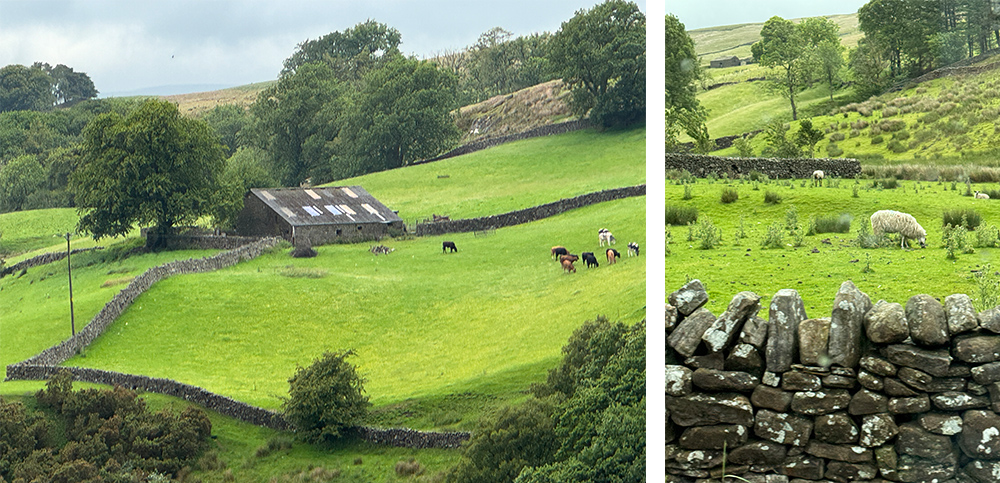
©Debbra Dunning Brouillette
Hawes: Lunch in the Capital of the Dales
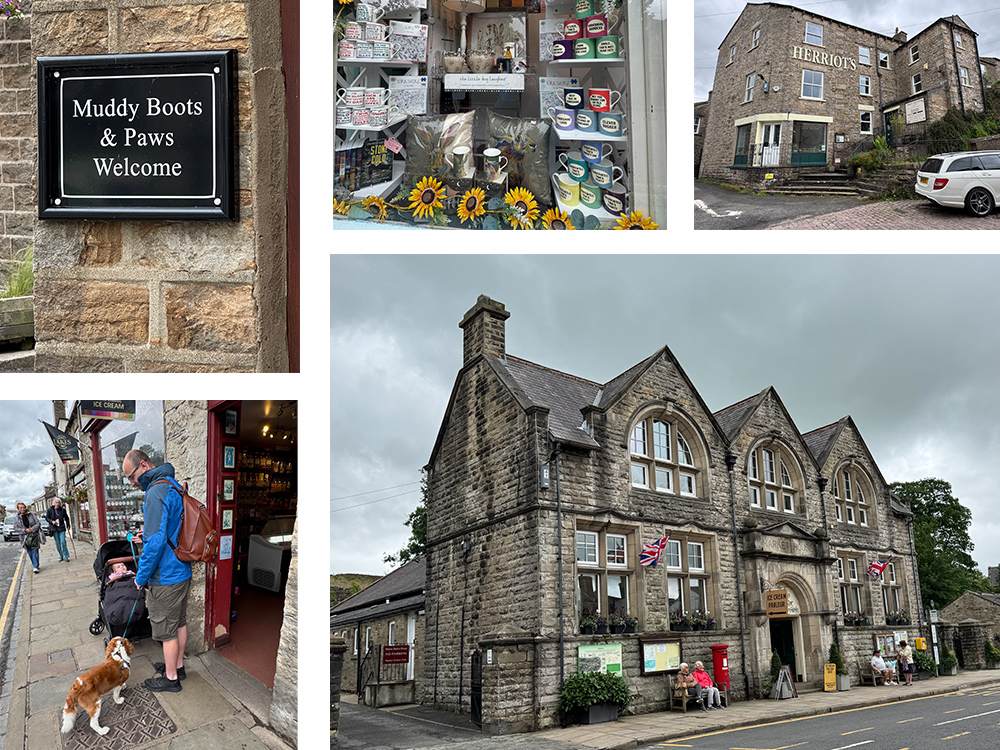
By midday, we arrived in Hawes, often called the “Capital of the Dales.” Although this stop isn’t directly connected to All Creatures Great and Small, it allowed us to stretch our legs, browse local shops, and enjoy lunch in one of the most charming market towns in Wensleydale.
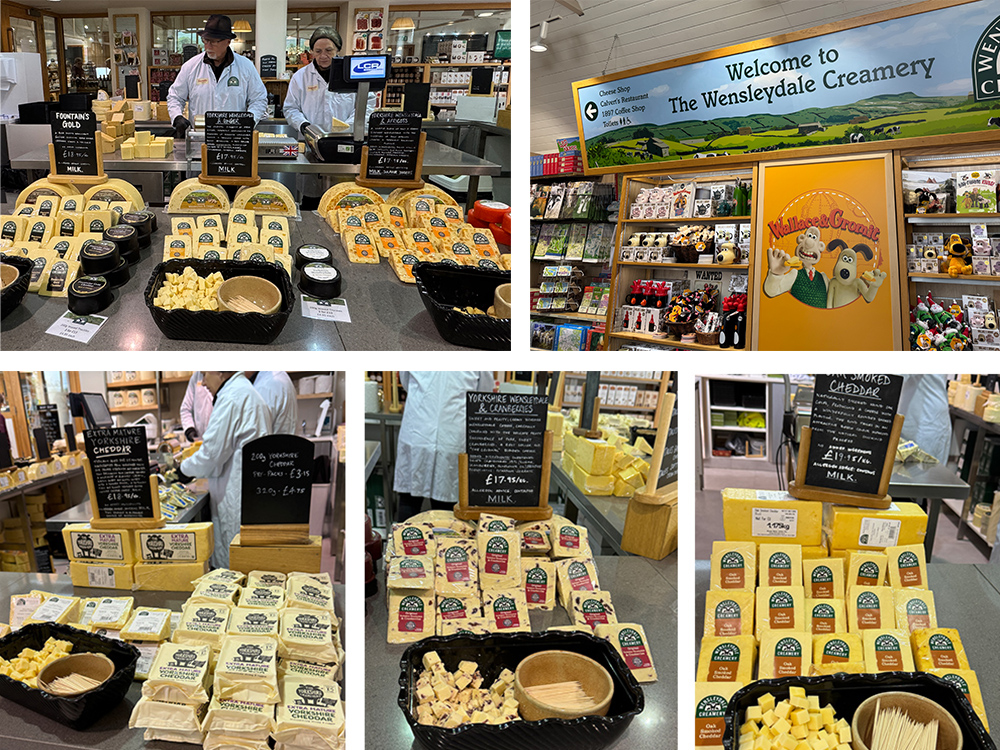
It was a stop on our small group tour from Oxford to York.
©Debbra Dunning Brouillette
Several people on our tour chose to visit the nearby Wensleydale Creamery, famous for making the region’s iconic crumbly cheese. Wensleydale cheese has been made in this valley since the 1100s, originally by French Cistercian monks, and today the Creamery offers tastings, a café, and an opportunity to learn about traditional cheese-making. Having toured it earlier in our trip through England, we decided to spend our time in town instead.
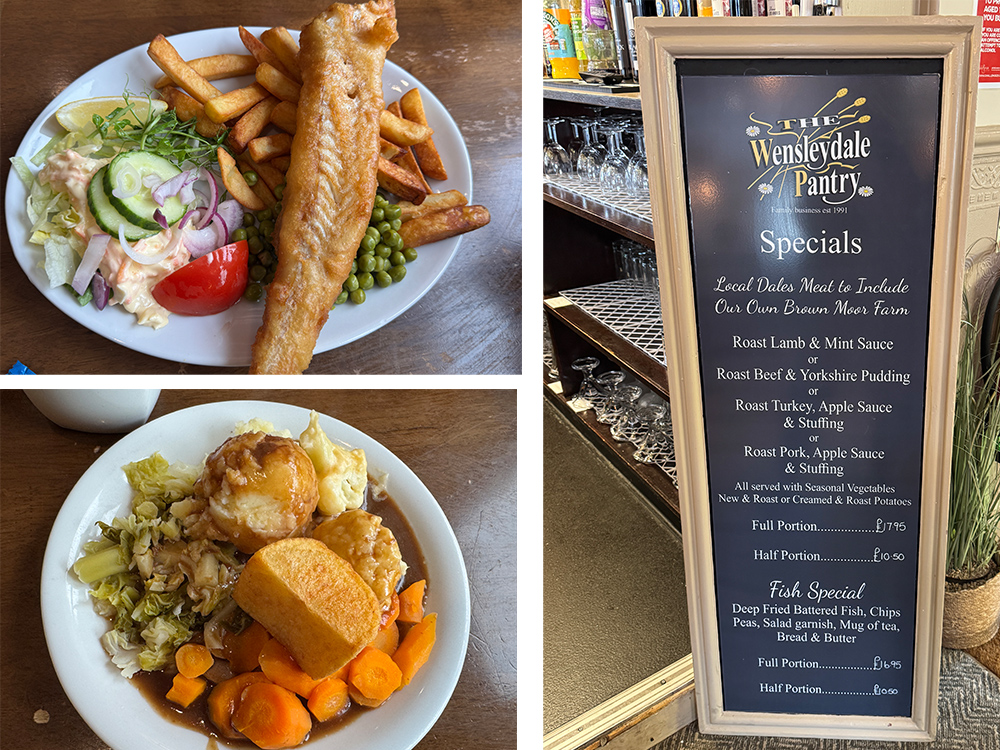
Pictured: Fish and Chips, served with salad and peas; Roast Lamb and Mint Sauce, served with vegetables.
©Debbra Dunning Brouillette
We discovered the perfect lunch spot at The Wensleydale Pantry, a cozy café run by a farming family that serves fresh, locally sourced food. After a leisurely lunch, we wandered past independent shops, soaking in the easy pace of a Dales market day. Even without a direct connection to Herriot’s stories, Hawes felt completely at home within the landscape he described — a working town rooted in agriculture, tradition, and community.
Aysgarth Falls: A Cinematic Interlude
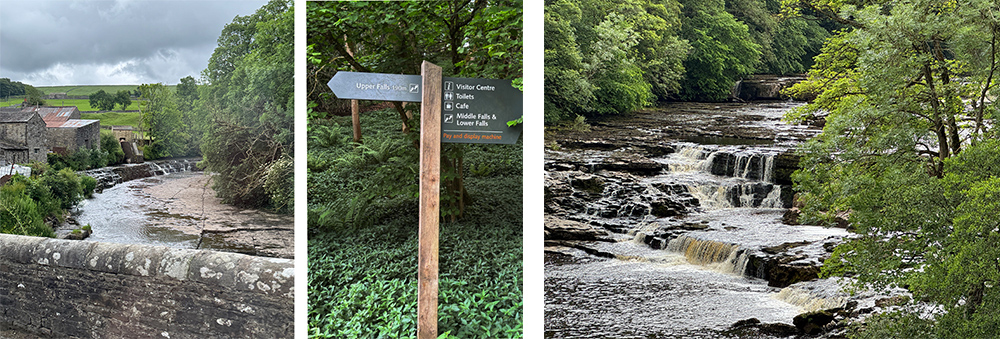
©Debbra Dunning Brouillette
From Hawes, we continued through Wensleydale to Aysgarth Falls, where the River Ure tumbles down in a series of broad, dramatic cascades. Unlike towering vertical waterfalls, Aysgarth spreads outward on stepped limestone shelves, forming a powerful curtain of rushing water.
Though not connected to All Creatures Great and Small, the falls have earned their own place in British film history.
They were famously featured in the 1991 film Robin Hood: Prince of Thieves, where Robin fights with Little John (see YouTube scene above), adding yet another layer of storytelling to the landscape. It was also a filming location for the 1992 film, Emily Brontë’s Wuthering Heights. It was an ideal stop for photos — and a reminder that the Yorkshire Dales have long provided a dramatic backdrop for tales both real and imagined.
Castle Bolton: Romance, Royalty, and Herriot History
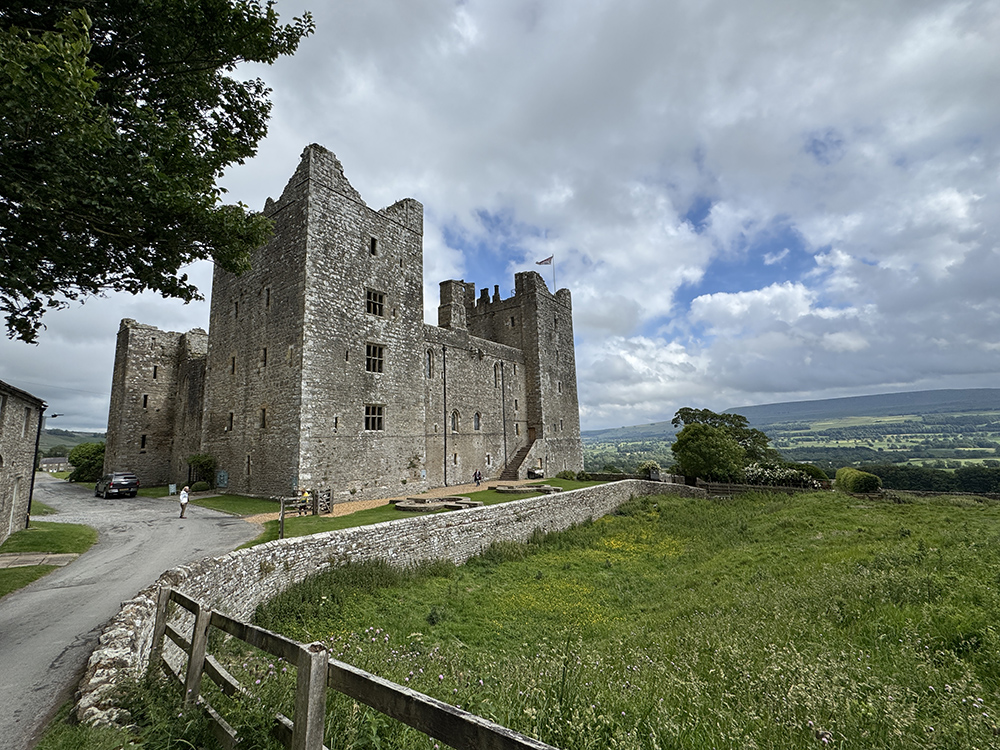
Our final stop was the magnificent Bolton Castle, a towering 14th-century fortress built in 1399. Rising from the green valley floor with commanding views over Wensleydale, the castle feels every bit as formidable today as it must have centuries ago.
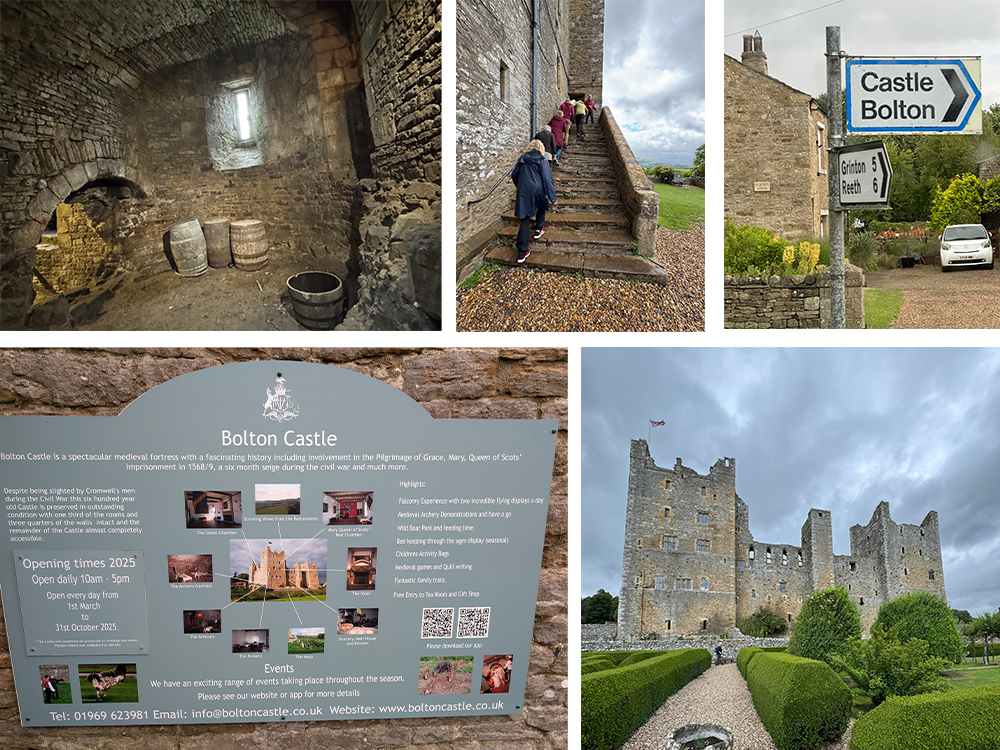
A Real-Life Proposal
For fans of James Herriot, Castle Bolton holds special significance: it was here that Alf Wight — the real-life James Herriot — proposed to his wife, Joan. Standing within its stone walls, it was touching to imagine that deeply personal moment unfolding against such a dramatic backdrop. The castle also appeared in the original BBC adaptation of All Creatures Great and Small (1978–1990), further cementing its connection to Herriot lore.
Yet its history extends far beyond television and romance. In 1568, Mary, Queen of Scots, was held prisoner here for six months, her captivity unfolding within these very walls during one of the most turbulent chapters of British history.
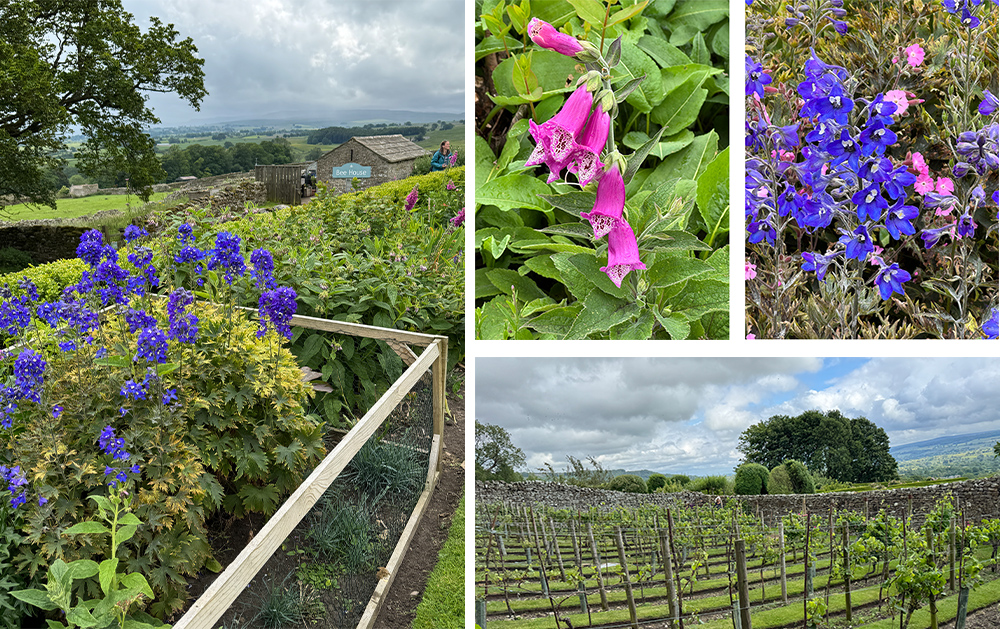
©Debbra Dunning Brouillette
We had time to explore the beautifully restored medieval gardens, which feature a maze, herb garden, rose garden, and even a small vineyard — offering a peaceful contrast to the fortress’s imposing exterior.
A Falconry Demonstration
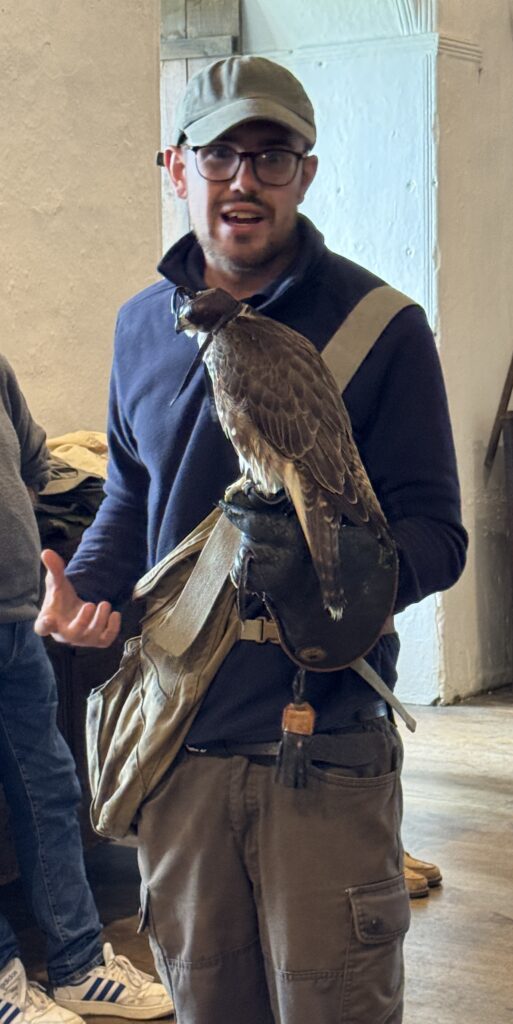
Inside the castle, we were treated to a falconry demonstration, where a handler introduced us to one of the birds of prey used in the castle’s falconry program. Though the bird wasn’t allowed to fly inside the building, the guide held it on a tether while explaining the history and training involved in medieval falconry. The setting made the experience feel timeless, as if medieval life had briefly returned within those stone walls.
More Than Just a List of Filming Locations
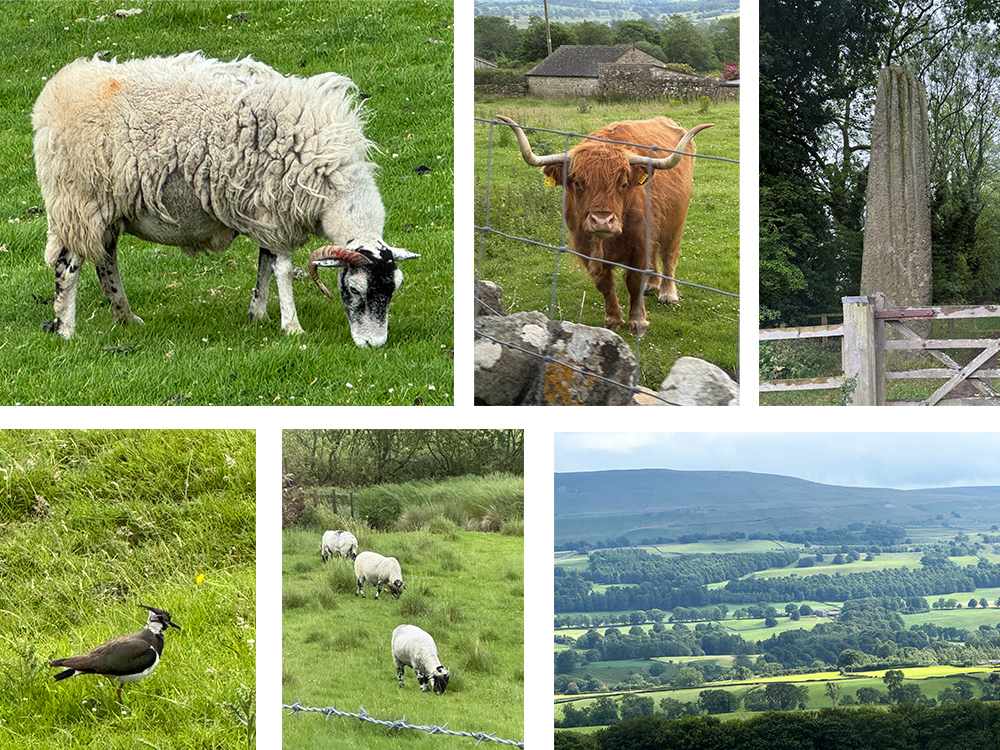
For fans of All Creatures Great and Small, this full-day excursion with Mountain Goat Tours offers more than just a list of filming locations. It provides context — blending the fictional Darrowby, the real-life career of Alf Wight, and the landscapes that have shaped rural Yorkshire for centuries. The small-group setting allows for a relaxed pace, expert commentary, and plenty of time to fully experience each stop, from village squares to expansive moorland views.
Even for travelers only casually familiar with the series, the tour stands on its own as an immersive introduction to the Yorkshire Dales. You’ll see historic churches, working farms, dramatic waterfalls, market towns, and a medieval castle layered with royal intrigue. It’s a thoughtfully planned day that balances scenery, storytelling, and history.
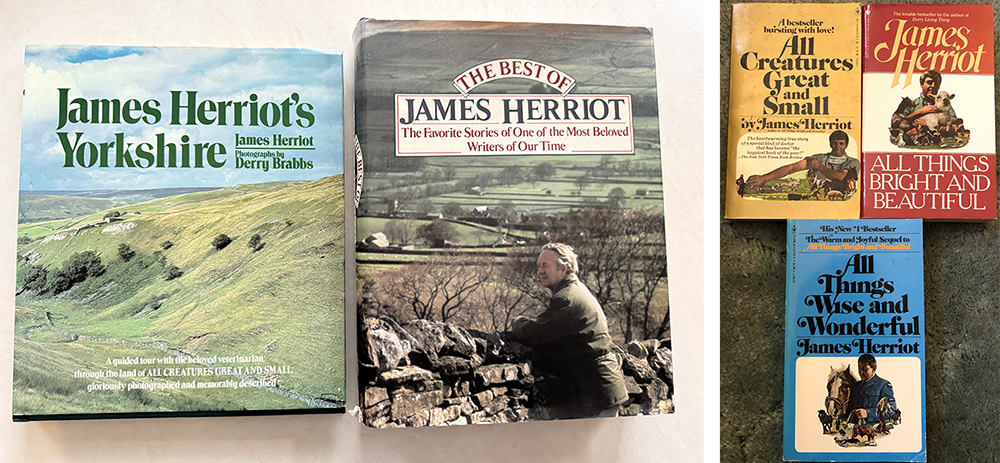
For me, though, it carried an added resonance. After first reading the books decades ago and catching a fleeting glimpse of Herriot’s world in Thirsk in 1991, walking through these villages and valleys felt like completing a quiet circle. The characters I once imagined now had landscapes attached to them — stone bridges, rolling fields, ancient church beams. What began as beloved stories on a page had, at last, become places I could stand within.
And that, perhaps, is the true gift of touring Herriot country: discovering that the heart of All Creatures Great and Small was never just the stories themselves, but the enduring beauty and humanity of the Yorkshire Dales.
If You Go
Mountain Goat’s All Creatures Great and Small Tour from York is an all-day tour in a 16-passenger van, leaving at 9 am and returning at 5:30 pm. It runs year-round.
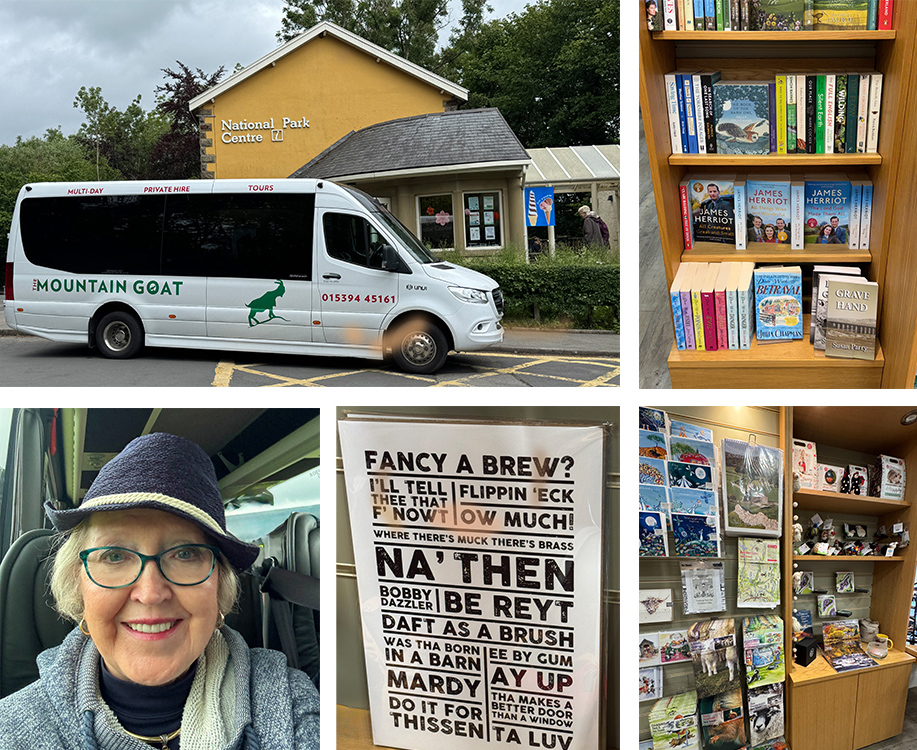
in Aysgarth Falls. Others are located in Grassington, Hawes, and Malham. ©Debbra Dunning Brouillette
You May Also Enjoy Reading
Prior to taking the full-day “All Creatures Great and Small” tour, we completed an 8-day small group tour with Adeo Travel from Oxford to York. We added on a night in York for the Mountain Goat tour before taking the train to London for a 3-night stay.
From Oxford to London: A 12-Day Journey Through England’s History, Countryside, and Culture
Thanks for this, Debbie. It does bring back many memories of our tour with you in June 2025. Loved your photos showing Grassington and its conversion to Darrowby. Three of us from North Bay watched the PBS special, All Creatures Great and Small – Seasons of the Dales, today. Then I checked my email and found that you sent the link to your site. What a coincidence! Helen
I’m so glad you enjoyed the article and photos, Helen! It was wonderful to share our special day tour in the Yorkshire Dales with you, Terryl, Peggy, and Sharon. It really capped off our time touring England on our small group tour from Oxford to York!
Wow- this was a fantastic and comprehensive article. I was recently staying with my 86 year old Mom and she introduced me to her favorite show – ACG&S! I am hooked and never knew there was a tour! Thank you so much for writing this and sharing it!
Thanks, Suzanne. I’m happy you’ve discovered “All Creatures Great and Small!” Taking the tour focused on Herriot and the PBS filming locations was a highlight of our time in England. If your travels take you to England, I hope you’ll get to the Yorkshire Dales.
Fantastic article, Debbra! What a pleasure to visit these glorious places through your words.
Thank you! Your feedback is appreciated! Spending a day immersed in stories of James Herriot was the perfect way to end our time in the Yorkshire Dales.
What a beautiful article! I enjoyed reading it.
Thank you, Merle. It was a joy to relive our time there last June while doing this article…